






Edward Ombui: What the Ocean Would Say to Humanity Right Now
We dive deep into the world of science, storytelling and the ocean with Edward Ombui, a writer, scientist, and passionate advocate for the blue economy. He shares what the ocean would say to us, Africa’s greatest marine opportunity, and how to bridge the gap between complex data and human emotion.

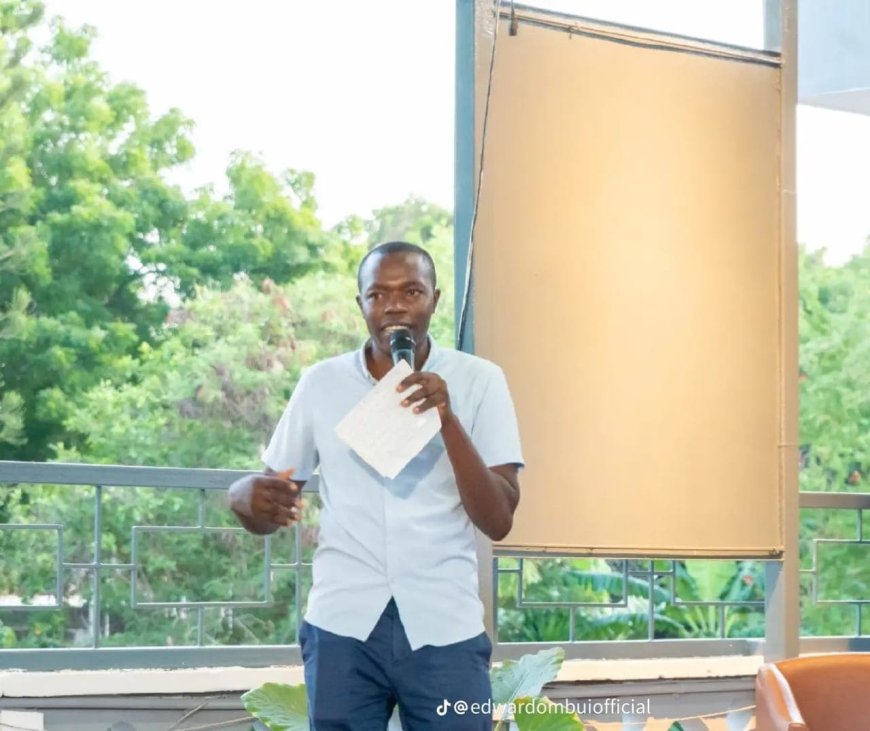
Who is Edward Ombui?
I am an environmental scientist, writer, poet, and climate storyteller driven by the belief that science must speak to the heart as much as it speaks to policy.
My work sits at the intersection of environmental research, creative expression, and community engagement. I use words, data, and performance to translate complex environmental realities into human stories that inspire action.
I am also an advocate for climate justice and sustainable development, particularly within coastal and vulnerable communities. I believe environmental protection is not just a scientific obligation but a moral one, deeply tied to social equity, cultural identity, and intergenerational responsibility.
Whether through research, poetry, journalism, or film, my purpose is to amplify nature’s voice and empower people to see themselves as stewards of the planet.
If the ocean could talk, what do you think it would say to humanity right now?
If the ocean could speak, I believe it would whisper and roar at the same time. It would warn us that its silence is not peace, but the exhaustion of a whole new level. It would say: “I have carried your history, fed your nations, and balanced your climate; yet only a few strive to protect me.”
The ocean would urge humanity to listen not only with our ears but with responsibility, to rethink how we fish, how we dump, how we build, and how we treat its shores. Ultimately, it would remind us that our survival is deeply tied to its healing: “Protect me, and I will protect you.”
What inspired you to combine science and writing and how do the two inform each other in your work?
My inspiration came from realizing that data alone cannot move people; but stories can. Science gives me facts, patterns, and truth. Writing gives me voice, emotion, and connection.
When I merge the two, I create work that is both informative and deeply human. Science keeps my writing grounded, while writing pushes my science to be more empathetic and accessible. Together, they help me bridge policy, community, and awareness.
As a writer, scientist and ocean lover, do you ever find yourself “arguing” with your own research?
Yes, many times! The writer in me wants to simplify, poetically summarize, and inspire. The scientist in me insists: “Be precise. Be accurate. Stick to the data.”
But this tension is healthy. It forces me to represent the ocean honestly while still making the story relatable. The arguments often lead to better communication, deeper reflection, and more responsible storytelling.
As someone passionate about the blue economy, what do you think is the biggest opportunity for Africa in this space?
Africa’s greatest opportunity lies in community-centered, sustainable ocean economies, especially in fisheries, coastal tourism, renewable energy, and marine biotechnology.
We still have underutilized coastlines, rich marine biodiversity, and young innovators who can drive change. If we invest in local capacity, fair policies, and ocean-smart entrepreneurship, the blue economy can become Africa’s next frontier for jobs, food security, and climate resilience.
How do you translate complex climate and ocean science into writing that’s engaging for a wider audience?
I use three guiding principles. I start with storytelling by turning data into human-centered narratives. I then use the simplicity technique, breaking down scientific terms into citizen everyday language.
Lastly, I mix emotion and imagery, weaving in metaphors, lived experiences, and coastal scenes that people can visualize. I believe science becomes powerful when people can feel it, not just understand it.
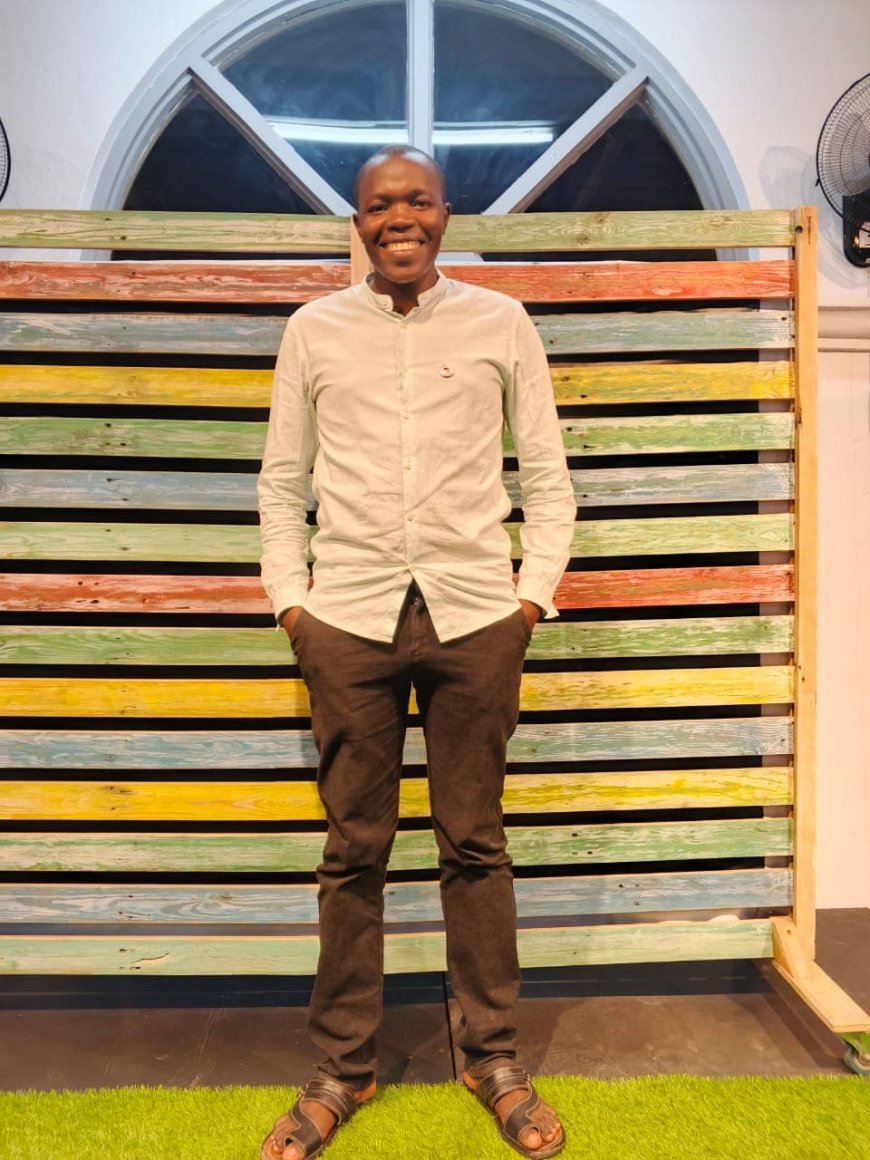
Under Malenga Mdogo, what themes or stories do you find yourself most drawn to writing about?
Under the name Malenga Mdogo, I am drawn to themes of Nature and human identity, the ocean as a life-giving space, resilience in the face of environmental injustice, and the responsibilities of being custodians of the Earth.
My writing often reflects a dialogue between the self and the environment, a search for meaning, belonging, and responsibility.
Can you share a moment in your scientific career that significantly influenced your perspective on environmental issues?
One defining moment was when I documented seagrass stories at the coast and listened to fishers explaining how changing tides and disappearing marine plants affected their daily lives.
Seeing scientific change reflected in human struggle made climate change painfully real. That experience reminded me that environmental issues are not just ecological; they are social, economic, and deeply emotional.
How can young people contribute meaningfully to climate action and the sustainable use of marine resources?
Young people can engage in community awareness and beach cleanups, use digital platforms to advocate and educate, participate in citizen science, and innovate solutions in waste reduction and ocean-friendly businesses. Climate action does not require grand gestures. Consistency, creativity, and community work make the greatest impact.
If you could see one policy change implemented tomorrow to protect our oceans and coastal communities, what would it be?
I would push for strict enforcement of coastal zoning and pollution control, especially around waste disposal and industrial activities.
When we prevent pollution at the source, we protect biodiversity, reduce ecosystem decline, and secure coastal livelihoods, all in one step. It is one policy with multiple environmental and social benefits.
If you could have any sea creature as a personal assistant for a day, which one would it be and why?
I would choose an octopus, one of the most intelligent ocean creatures. It is observant, adaptable, curious, and strategic.
An octopus assistant could help me see the world differently, solve problems creatively, and remind me that nature is full of wisdom we are yet to understand.
As we look ahead, what is your ultimate message about the reality of the climate crisis and the opportunities presented by global forums like UNEA-7?
What we are witnessing today is no longer a distant environmental warning, it is a lived reality. Climate change has shifted from being a future risk to a present-day crisis, manifesting through extreme weather events, rising sea levels, and increasing food and water insecurity. These impacts are interconnected and disproportionately affect communities that have contributed the least to global emissions.
Personally, what concerns me most is the speed at which these changes are unfolding compared to the slow pace of global response.
Ecosystems are being pushed beyond recovery, and livelihoods, especially in coastal and rural regions, are being destabilized. At the same time, climate anxiety is growing, particularly among young people who feel burdened with inheriting a crisis they did not create.
UNEA-7 presents us with a critical opportunity. It is a reminder that environmental challenges require collective global action rooted in science, equity, and political will.
I believe this moment calls for moving beyond commitments on paper to bold, inclusive, and locally grounded solutions.
Climate action must prioritize adaptation, resilience, and community-led initiatives while addressing the root causes of environmental degradation.
The climate crisis is not just an environmental issue, it is a human story. How we respond now will define not only the health of our planet but the dignity and survival of future generations.
What's Your Reaction?