




Ghana’s Forests Under Threat: Communities Fight Back Against Illegal Gold Mining
Illegal gold mining is ravaging Ghana’s forests and rivers. Communities and grassroots movements are fighting back to restore the land and protect their future.

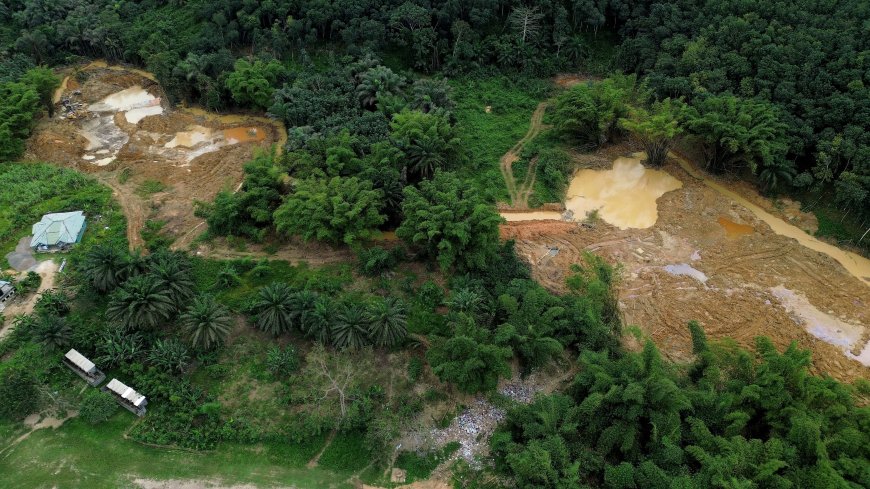
At dawn, the forest floor in Ghana used to awaken with a soft chorus, birds calling from the canopy, leaves rustling in the breeze, and the gentle murmur of nearby streams.
After a night of rain, the earth smelled rich and alive, and Wawa trees stretched their arms across the sky, offering cool shade to anyone who wandered beneath.
For the families living near these forests, this wasn’t just nature, it was home, protection, and life itself.
Forests on the Brink
Today, the sound of Ghana’s forests has changed. Birds no longer fill the canopy with song. Instead, the air hums with chainsaws and excavators, while smoke rises from burning roots and pools of muddy, tainted water spread where streams once ran clear.
Illegal gold mining locally called galamsey is eating away at these landscapes faster than ever. Research shows that while illegal logging has cost Ghana more than $100 million in uncollected timber revenue each year, mining is leaving more visible and devastating scars.
Across six of the country’s sixteen regions, 45 of 288 forest reserves have already been ravaged by illegal mining. In nine of them, the destruction is total: ecosystems dismantled, wildlife gone, and the carbon-absorbing trees that once sheltered life reduced to stumps.
When the trees fall, everything else begins to fail rivers shrink, crops wither, and once-cool climates turn harsh. The Lands and Natural Resources Ministry warns that 5,252 hectares of forest reserves have already been lost to galamsey, leaving behind open wounds in the land.
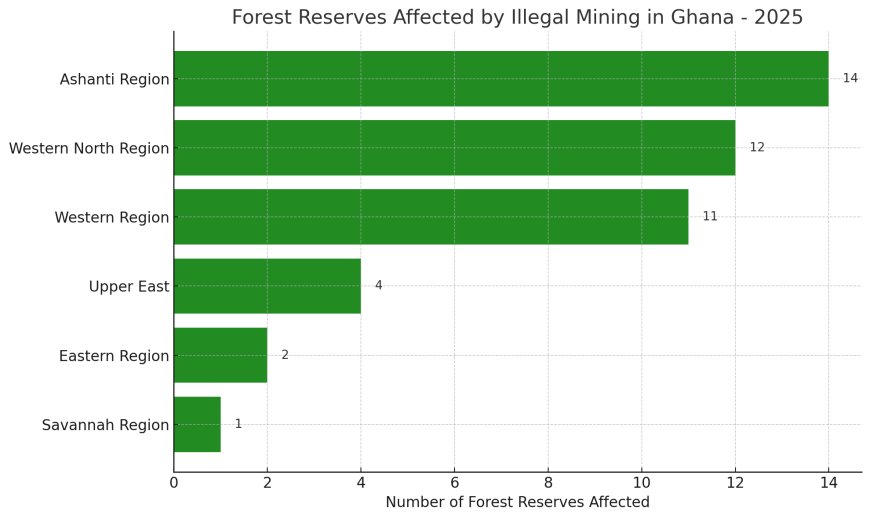 Regional breakdown of affected forest reserves (Source: Ministry of Lands & Natural Resources)
The Mechanics of Destruction
In the Western Region, the whine of chainsaws slices through the morning air as men fell trees along a muddy riverbank. Within hours, excavators dig deep wounds into the earth, scooping out the topsoil in search of gold veins.
This is how galamsey illegal gold mining, works. First, vegetation is cleared with chainsaws. Then, the soil is churned and washed with mercury or cyanide, chemicals that poison both land and water.
“Galamsey is especially rampant in the Western and Middle Belt regions,” says David Nana Kudiewu-Miod, a geological mining expert with licensed firm Mohammed Brothers in Tarkwa. Born in Obuasi and now working in Tarkwa both gold towns he has watched the devastation worsen over the past two decades.
“Even before the Minerals and Mining Act of 2006, illegal mining was already a problem,” he explains. “Once a mining company licensed or not ignores mining protocols, it becomes illegal.”
He adds that the problem is deeply rooted in power. “Around 70% of illegal mining activities are secretly backed by politicians. And the truth is, we know who they are, and they know we know.”
The Business of Galamsey
In the pits of Tarkwa, young men disappear into narrow shafts, their headlamps flickering in the dark as they dig for traces of gold. Above ground, others operate excavators and pump machines, while women pound rocks into dust under the sun.
“Galamsey is no longer a haphazard affair,” says David Nana Kudiewu-Miod, a geological mining expert with licensed firm Mohammed Brothers. “It’s an organized business, with financiers, managers, and full logistics behind it.”
The miners at the bottom of the chain take the biggest risks. Some are university or polytechnic graduates; others have only secondary or basic education. They all work long days in dangerous conditions for fast money.
“A team of three or four miners can make up to 10,000 cedis, about $1,000, in a month,” he explains. “The more they work, the more they earn but the risks are everywhere.”
The dangers extend beyond the miners themselves. A 2024 study by the Environmental Protection Agency (EPA) and Newmont Mining Corporation revealed high levels of mercury in the blood of food vendors, hawkers, and traders in Tarkwa people who never set foot in the pits.
Women in the Shadows
Before the sun rises in Prestea, Akosua Kwakye is already awake. By 4 a.m., she has cooked for the men, tied a scarf around her head, and walked to the mining site. There, she spends the day pounding rocks for traces of gold.
“It’s not safe,” she admits, sweat dripping as the hammer strikes. “But we don’t have options.”
Across Ghana’s mining towns, women like Akosua work in the shadows of galamsey. They cook, crush ore, and haul water, yet earn less and face constant danger. Even teenage girls are drawn in some leave school to sell food at the pits.
“What they earn in a day is more than their mothers make in a week,” one local teacher explains. But the rewards are fleeting.
“After working here, I still have to take care of the house. It’s double the work, but no one sees it,” says another woman at the Prestea site.
The fast money rarely lasts. A food vendor shakes her head: “Some of the girls stop school for this. But the money? It’s gone as fast as it comes.”
Poverty, Policy, and Profit
From above, the galamsey sites look like open wounds jagged pits filled with brown water, surrounded by dead trees and dusty soil. The land that once grew cocoa and maize now lies broken.
“The relentless pursuit of gold is destroying our forests and polluting our waterways,” warns Professor Christopher Gordon, former Director of the Institute for Environment and Sanitation Studies at the University of Ghana.
He says Ghana is on a dangerous path. “The 1.5-degree threshold is not just a number, it’s a reality. By 2038, we may no longer be able to grow cocoa, our beloved cash crop.”
For communities already struggling in poverty, the stakes are life-changing. Forests are collapsing, rivers are shrinking, and the climate is becoming harsher. If nothing changes, he warns, the price will be survival itself.
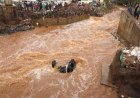
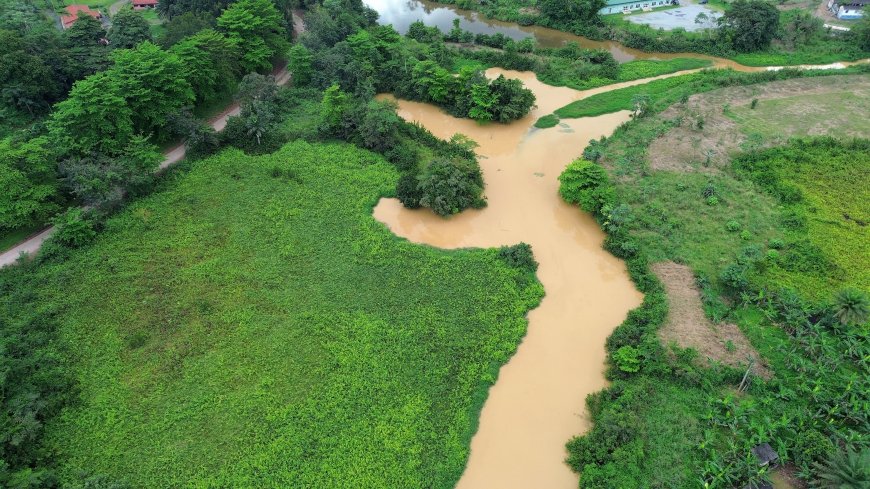 Murky waters: The aftermath of illegal mining in Ghana’s forest reserves (Photo Credit: Festus Randy Jackson-Davis)
Reclamation and Resistance
At first glance, parts of Ghana’s ravaged forests are beginning to heal. On April 3, 2025, Lands and Natural Resources Minister Emmanuel Armah-Kofi Buah stood before cameras and declared a small victory: seven forest reserves had been reclaimed from armed artisanal miners.
But the optimism was short-lived. “These gangs have already tried to re-enter the forests,” he admitted, recalling a near-fatal assault on a Forestry Commission officer. “It’s a constant battle.”
Environmentalists like Daryl Bosu of A Rocha Ghana question whether these gains can last. “The reclamation of the seven forest reserves seems like a charade,” he warns. “As soon as the task force leaves, miners sneak back in. It’s a game of cat and mouse.”
True restoration, experts say, is painfully slow. Dormant seeds may help the land recover, but the first 1–5 years mostly see colonizer plants like wild grasses and shrubs. Birds and rodents eventually bring new seeds, and biodiversity inches back.
With government support soil improvement, land leveling, and targeted tree planting visible recovery can happen in five years. Without it, the land may remain scarred for over a decade. And even then, Daryl Bosu reminds us, “Restored forests can never fully replace the ecological richness of primary forests.”
Legislation Fuels Destruction
Even as Ghana battles the galamsey crisis, a controversial law has quietly strengthened the hand of miners. Passed in 2022, the Environmental Protection (Mining in Forest Reserves) Regulations L.I. 2462 grants the president discretionary power to approve mining in protected forest reserves, under the justification of “national interest.”
For conservationists, the law is a betrayal. Daryl Bosu of A Rocha Ghana argues that the framework itself is flawed. “The government plans to amend the parent law so that the president will first need written consent from the Lands Minister,” he explains. “But the truth is, this law opens the door for destruction. Why amend it instead of repealing it outright?”
Critics, including legal scholars, say L.I. 2462 is both unconstitutional and dangerous, granting powers that neither the minister nor the president lawfully possesses. By leaving forest reserves vulnerable, they warn, Ghana risks accelerating the collapse of its ecosystems.
Unified Voices for Change
A forest reserve is not a mine-in-waiting,” declared Emerita Prof. Isabella Akyinbah Quakyi, the Academy’s president. “Our reserves exist to protect biodiversity, provide clean water, and preserve the balance of life.”
The following day, the Ghana Coalition Against Galamsey (GCAG) joined the outcry, demanding the law be revoked, police complicity ended, and culprits prosecuted. Convener Kenneth Ashigbey issued a chilling warning: “If this government does not act decisively, no one is safe.”
Even mining experts like David Nana Kudiewu-Miod agree that the fight needs bold leadership. “Ghana needs a radical leader who will put the country first, even if it means standing up to friends and family,” he says. “Someone who can finally say, ‘Enough. I’m stopping this”
Grassroots Fightback
On a quiet morning in Tamale, Alhassan Abubakari kneels in the dry soil, pressing a shea seedling into the earth. Around him, women and young farmers move in a rhythm of restoration, determined to bring life back to land scarred by galamsey.
Abubakari, the coordinator of GLFx Tamale, leads a community-driven initiative to restore degraded forests in Ghana’s Northern Region. “We train farmers in agro-ecological practices composting, using traditional seeds, and even harnessing the pest-control power of neem leaves,” he explains. “It’s about protecting the land while creating healthier, more resilient farms.”
Across the country, similar efforts are taking root. The Africa Afforestation Association (AAA) has launched Operation Hope, a bold plan to restore 20,000 hectares in the Ashanti Region. With 1.5 million trees and innovative tools like the Groasis Waterboxx, the project aims not just to heal forests but to create green jobs for women and youth.
The government, too, has stepped in with the Tree for Life Reforestation Initiative, which seeks to plant 20 million trees to strengthen Ghana’s climate resilience.
From seedlings to soil, these efforts represent more than environmental restoration they are acts of survival and dignity. For communities living in the shadow of galamsey, every new leaf is a quiet rebellion against destruction, and a promise that the land can live again.
Afia Agyapomaa Ofosu is a science journalist with a focus on environmental and climate issues in the extractive industry.
What's Your Reaction?