




Ghana’s Gender-Climate Risk Map Reveals Districts Where Women Suffer Most
Ghana’s new Gender-Climate Risk Map exposes districts where women face the harshest climate impacts in farming, water, and energy, guiding equitable adaptation efforts.


Before sunrise in Adentan, a suburb of Accra, teenage girls can be seen walking with yellow jerrycans, racing to fetch water before school. In another part of Ghana, women farmers fight off weeds in cracked, dry soil, waiting for rains that no longer come on time.
These everyday struggles are now at the heart of a groundbreaking tool launched in Accra a map that finally shows where climate change is hitting women the hardest.
The Gender and Climate Change Vulnerability Hotspot Maps, developed by the International Water Management Institute (IWMI) with support from the Delegation of the European Union to Ghana and AGNES, go beyond showing climate exposure.
They uncover the human stories behind the statistics: women farmers battling shifting rains, girls fetching water before class, and small-scale energy users struggling with rising fuel costs.
Closing the Gap
Until now, most of Ghana’s climate adaptation plans relied on broad assessments that overlooked gender dynamics. This new map changes that.
It identifies specific districts where women face the highest risks in agriculture, water, and energy and where their ability to respond is weakest.
“This is about unequal vulnerability,” explained Charity Osei-Amponsah, Deputy Country Representative at IWMI. “We may all face the same climate exposure, but not with the same resources, resilience, or opportunities to cope. And studies keep showing us: women are hit harder.”
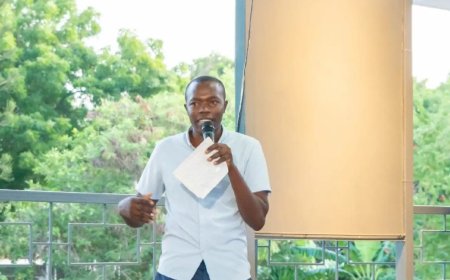
At the launch, Afua Ansre, Senior Gender Specialist at UN Women, called the tool a breakthrough. “For the first time, policymakers, planners, and local offices can vividly discern where climate risks and gender disparities are most acute and where action is most urgently needed.”
She added that the maps will fill long-standing data gaps, providing sex-disaggregated, district-level data that clearly maps how climate exposure, sector sensitivity, and adaptive capacity intersect.
How the Map Works
The maps cover three key sectors, agriculture, water, and energy and focus on three main indicators:
Exposure, how districts experience hazards like droughts, floods, heatwaves, or erratic rainfall
Sensitivity, how dependent local livelihoods are on affected systems, such as rain-fed farming or hydropower
Adaptive capacity, what communities have to respond, from credit and irrigation to education, healthcare, and access to information
Each district receives a score for these indicators, which are combined to create an interactive hotspot map. Darker colors signal higher vulnerability, especially for women. Users can zoom in on districts, view specific variables, and pinpoint where urgent interventions are needed.
 Snapshot of Gender-Responsive Adaptive Capacity in Ghana’s Water Sector
Sector Snapshots: Agriculture, Water, and Energy
On the agriculture map, Karaga in the Northern Region emerges as one of Ghana’s most vulnerable districts. Women farmers here face a double burden frequent floods and punishing droughts with few resources to recover.
In Assin North in the Central Region, delayed rains have cut yields and disrupted planting cycles.
“Climate change is altering our growing seasons,” said Charity Osei-Amponsah. “And women who make up 70% of the agricultural workforce are feeling the impact the most.”
The water sector map exposes a challenge that is now both rural and urban. In Adentan Municipality near Accra, water scarcity forces teenage girls to walk long distances before school to fetch water.
“It’s no longer just a rural problem,” Osei-Amponsah explained. “In many areas, girls are still late for class because they spend hours fetching water.”
The energy sector tells yet another story. In the Central Region, dry spells reduce hydropower output, while reliance on traditional biomass fuels becomes unsustainable.
Small, women-led agro-processing businesses are the hardest hit, struggling with unreliable and costly energy sources that threaten their livelihoods.
 Map of Energy-Gender-Climate Change Hotspots
Grounded in Reality
To ensure the maps reflect real life, IWMI and AGNES conducted field visits to six districts identified as climate vulnerability hotspots. Through focus groups and community interviews, they confirmed that the lived experiences matched the map’s predictions.
In Assin North, drought dominated conversations. Karaga grappled with frequent flooding, while in the Central Region’s Ajumako-Enyan-Essiam and Assin South, farmers spoke of delayed rains disrupting planting seasons.
For female-headed households, the challenges were even greater they lacked labor, tools, and farm inputs to recover quickly.
Radio remains the most trusted source for weather updates, but digital gaps persist. “Not everyone owns a phone with internet access, especially women,” noted Osei-Amponsah. “That gap in information access further limits their ability to adapt.”
The field visits confirmed that climate vulnerability is not just about location it is about layered inequalities, from limited energy and water access to gender roles and digital divides.
A Guide for Action
The maps are shaping Ghana’s climate response by guiding the National Adaptation Plan and local government programs, showing exactly where to build resilience, direct resources effectively, and ensure no vulnerable district is left behind.
Researchers are also studying outlier districts, places surrounded by high-risk zones but showing lower vulnerability. They want to understand what makes these areas resilient, and how those practices can be replicated across the country.
Afia Agyapomaa Ofosu is a West Africa-based science journalist covering the intersection of climate change and gender.
E-mail: prissyof@yahoo.com
What's Your Reaction?