






High Alcohol Use in Kakamega Raises Calls for Treatment and Tighter Controls
Alcohol use remains high in Western Kenya as Kakamega expands rehabilitation, treatment and enforcement efforts to address alcohol dependence.
By Seliphar Machoni & Dennis Avokoywa - Nearly one in four people aged 15 to 65 in Western Kenya were current alcohol users, according to the 2022 National Survey on the Status of Drugs and Substance Use in Kenya.
The survey, conducted by the National Authority for the Campaign Against Alcohol and Drug Abuse (NACADA), found that 23.8 percent of people in the region used alcohol, compared with 11.8 percent nationally.
Western Kenya also recorded the highest prevalence among the areas surveyed for traditional liquor use at 12.9 percent and chang'aa, a locally distilled alcoholic spirit, at 11.4 percent.
The survey further found that the minimum reported age of alcohol initiation in Kenya was seven years, pointing to the early age at which some people begin using alcohol.
In Kakamega County, particularly in Mumias West, the consequences of alcohol dependence extend beyond individual users, affecting families, communities and the healthcare system. Concerns about alcohol-related health complications have increased calls for prevention, treatment and recovery support.
These issues were among those raised during a recent public sensitisation walk in Mumias West, which brought together community members, government agencies, non-governmental organisations and faith-based groups to discuss alcohol dependence and possible responses.
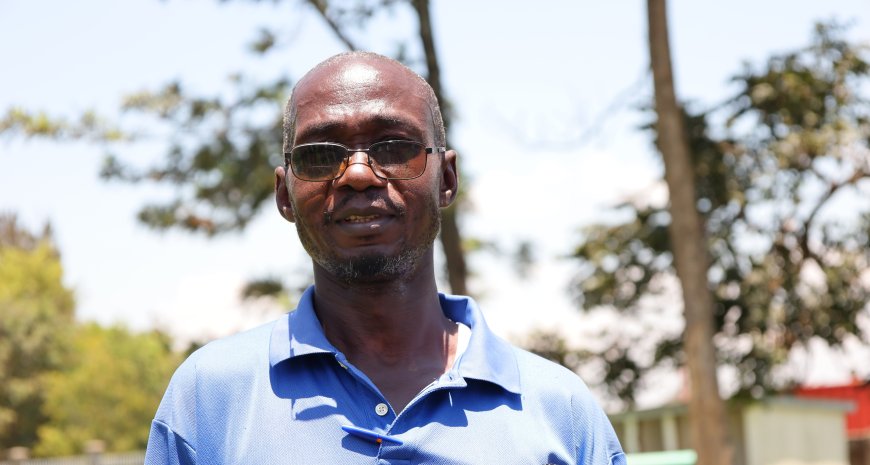
Etot, a teacher by profession, knows these challenges personally. He said underlying personal struggles and life pressures contributed to his descent into alcohol dependence, which eventually affected his life.
“As a teacher, when I became an addict, it overwhelmed my life, but fortunately, my employer stepped in,” Etot said.
According to Etot, the Teachers Service Commission (TSC) supported him through its workplace wellness and psychosocial support services. He said the intervention helped him access recovery guidance, counselling and wellness support.
Now in recovery, Etot credits his employer with helping him regain control of his life and continue his teaching career.
“I want to thank my employer, the TSC, for guiding me and helping me get my life back. Today, I am strong and focused. I am using my journey to emphasise prevention and show others that recovery is possible when structured support systems exist,” Etot said.
The response to alcohol dependence in Mumias West includes efforts to restrict illicit brews while expanding access to treatment and recovery support.
To strengthen treatment capacity, the Kakamega County Government has approved KES 56 million for the construction and equipping of a dedicated Alcohol and Substance Abuse Rehabilitation Centre in Mumias West Constituency. The investment is intended to expand access to affordable treatment for residents seeking help for alcohol dependence.
NACADA has also earmarked a local Level 4 health facility to serve as a rehabilitation hub and has procured specialised equipment to support the provision of local clinical care.
“As a government, we cannot win this fight on our own,” said Eunice Anubia, NACADA Coordinator for Kakamega County. “We are currently conducting the national 100-day Rapid Results Initiative (RRI) crackdown on illicit brews alongside administrative and security teams. At the same time, we are working to address systemic legislative gaps.”
Anubia said NACADA recently engaged the Kakamega County Government on amendments to its Alcoholic Drinks Control Act to align local licensing rules with national legislation. Among the proposed changes is increasing the required buffer distance between liquor outlets and learning institutions from 100 metres to 300 metres.
She added that NACADA is also working with the Judiciary and State Counsel to challenge court orders obtained by bar owners who fail to comply with alcohol control regulations. The authority is using expert spatial measurements to support the enforcement of closures for outlets operating near schools.
For civil society organisations, tackling alcohol dependence also means making recovery support more affordable and accessible. Ishmael Shem, Director of Blue Cross, which is marking 30 years in Kenya and 125 years globally, said specialised inpatient rehabilitation centres remain financially out of reach for many families.
“Rehabilitation in private facilities is very expensive. To bridge this gap, Blue Cross developed an affordable, community-based 12-step recovery curriculum. We are training local church leaders to roll out this roadmap within neighbourhoods so that recovery support is accessible right at the doorstep,” Shem said.
Elphas Were, convener of the Kenya Economic Youth Network (KEYN), said sustained community sensitisation must accompany legislative reforms.
“During our recent community forums, residents tearfully described the devastation alcohol has brought to their homes. This walk is just the beginning of continuous outreach to both in-school and out-of-school youth,” Were said.
For administrative officers and grassroots advocates, enforcing alcohol control laws in Mumias West presents significant operational challenges.
Senior Area Chief Steven Eroba highlighted the area's geographical vulnerability.
“Our proximity to the Uganda border makes this area a transit point for cross-border syndicates smuggling illicit liquor and narcotics, which often evade routine police networks,” Eroba said.
“Furthermore, because the illicit trade generates high profits, law enforcement teams routinely face violent hostility and physical attacks during raids on illegal dens. But despite the risks, we will not relent.”
The social consequences of alcohol consumption are also felt within homes and schools. Violent Ombaka, Executive Director of the Women Peace Alliance (WOPA), linked heavy alcohol and chang'aa consumption to domestic conflict.
“In our daily work handling Gender-Based Violence cases, substance abuse is consistently identified as a primary trigger for severe domestic assaults and violence,” Ombaka said.
Meanwhile, educators are warning about the impact of substance abuse on students' safety and its wider implications for young people and communities. Kennedy Kunani, National Chairman of Amani Club, which operates under the Ministry of Education, the Teachers Service Commission and the National Cohesion and Integration Commission (NCIC), called for tighter school zoning and changes to existing laws.
“We have bars operating right next to school gates, allowing students to sneak out, drink, and return to class. We are also advocating for Parliament to consider raising the legal drinking age from 18 to 21. Today, many secondary students are 18 or older and use their legal adult status as a cover when caught abusing substances. Furthermore, as political seasons approach, intoxicated youth are routinely recruited into political goonism, a trend we must halt to protect communities from violence,” Kunani cautioned.
The campaign was part of coordinated alcohol and drug prevention activities in Kakamega, Kisumu, Homa Bay and Kiambu.
Stakeholders said addressing alcohol and drug abuse would require sustained efforts that combine prevention, enforcement, rehabilitation and family support, particularly to reduce early exposure among young people and support those already affected by addiction.
What's Your Reaction?