









In Kendu Bay, a Sobriety Marathon Is Turning Recovery Into Community Healing
In Kendu Bay, David Said turned 16 years of alcoholism into a community movement. Discover how his Sobriety Marathon is fighting addiction and bringing mental health healing to the region.
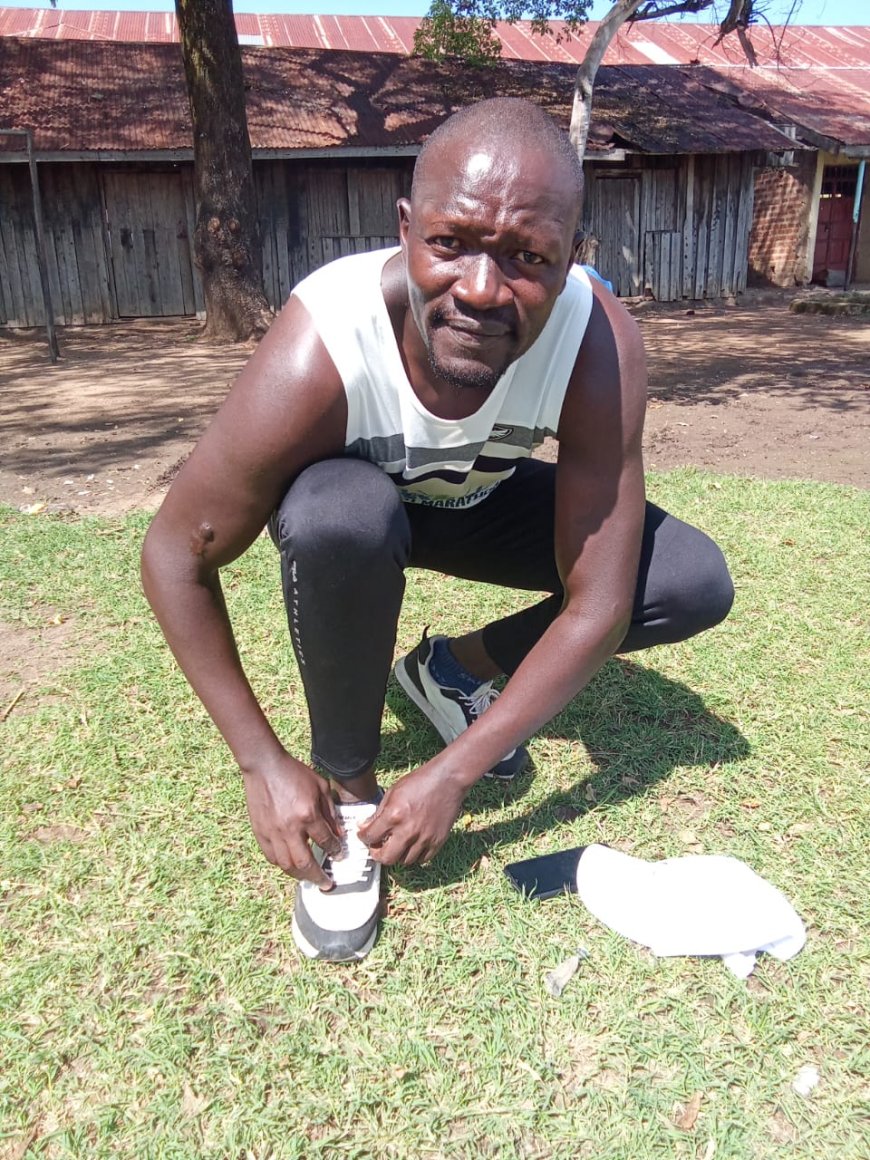
By Sarah Otiende - At dawn in Kendu Bay, runners gather quietly near the lakeshore. Shoes are tightened, breaths steadied, bodies stretched. The air carries both anticipation and something deeper-resolved.
At the center of it all stands David Said. Not as a professional athlete chasing medals, but as a man who understands endurance in its truest form.
The Kendu Bay Sobriety Half Marathon and Mental Wellness Festival is not about speed or victory. It is about rising. About choosing forward movement when life once stood still.
For David, every step on this course mirrors a longer, harder journey, one that stretched across 16 years of alcoholism and has now given way to four and a half years of what he calls “uninterested sobriety.”
“Alcohol took 16 years of my life quietly,” he says. “Sobriety has given me freedom intentionally.”
David’s relationship with alcohol did not begin with rebellion or peer pressure. It began with familiarity.
He was visually introduced to alcohol in upper primary school long before he ever tasted it. By Form Two, he was actively drinking. He stopped briefly, returned in Form Four, and after completing his KCSE in 2006, what felt like harmless celebration slowly hardened into habit.
“There was no single dramatic moment,” David recalls. “Just a slow loss of control.”
At the time, sports anchored him. Basketball, handball, shot put, and discus gave him discipline and focus. He was visible in positive spaces, an all-round student with promise.
His mother remembers that version of her son clearly.
“He was focused, active, and full of potential, especially disciplined in sports and community life,” she says.
But beneath the surface, vulnerability had already taken root.
Functioning, Until He Wasn’t
Even as drinking escalated, David remained employed. He worked at Britam, productive and reliable on the outside. Employment gave him structure but it also masked the problem.
“As long as I showed up and delivered, no one questioned what happened after hours,” he says.
At home, the cost was deeply personal.
David’s wife describes those years as emotionally destabilizing.
“He was present physically, but emotionally unpredictable,” she says. “Some days he was loving and engaged; other days he was distant and withdrawn. Alcohol slowly changed his consistency.”
Trust became fragile. Communication suffered. Stability was uncertain.
“The family often had to adjust around his moods and availability,” she adds.
Alcohol did not destroy the home all at once. It eroded leadership quietly, affecting emotional safety, responsibility, and direction.
A Mother’s Watchful Hope
For David’s mother, the struggle revealed itself gradually.
“It wasn’t one moment,” she says. “It was a pattern that became clear over time.”
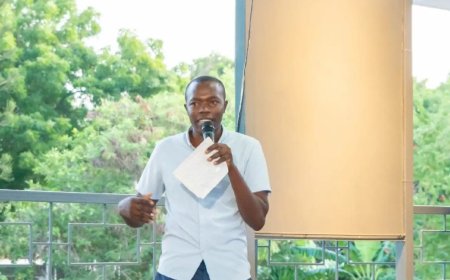
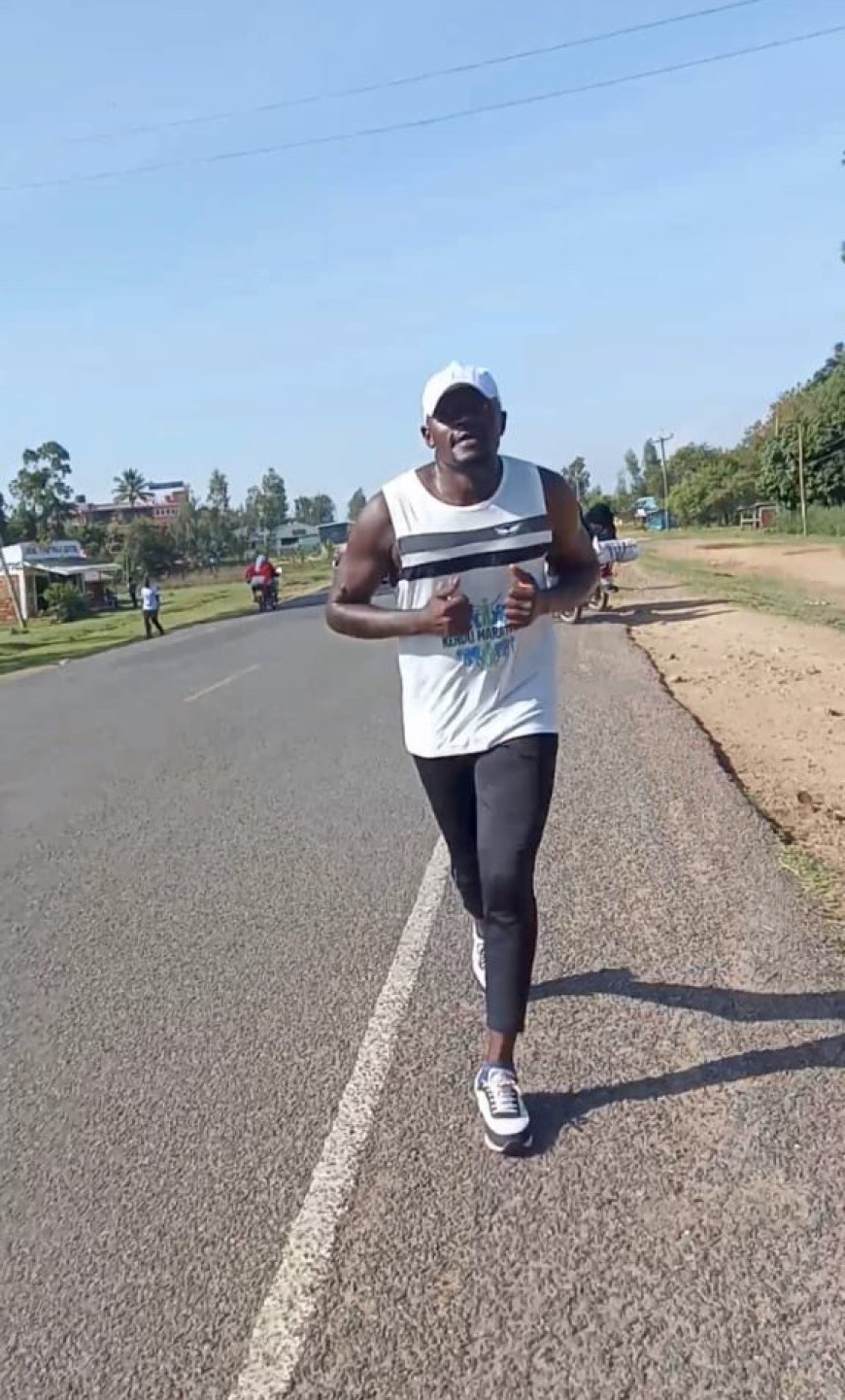 David Said Owuor during the Kendu Bay Sobriety and dignity half marathon. Photo Otende
There were no school disciplinary calls. Instead, she chose conversation, prayer, and close support.
“I prayed consistently, encouraged him, corrected where necessary, and refused to give up on him even when it was painful.”
The loss of David’s father in 2008 left a silent weight in the family. Though addiction had not yet fully taken hold, the absence created a vulnerability alcohol would later exploit.
Still, hope never left her.
“As a mother,” she says, “hope never leaves you, even in the darkest moments.”
David was raised in a deeply faith-rooted home. His father was a preacher. His mother, an intercessor. The church was not foreign, it was familiar.
He prayed. He served. He attended church. And he drank.
“For a long time, my faith and my addiction lived side by side,” David says. “That contradiction carried a lot of shame.”
“It took years to understand that faith was not absent, it was waiting for honesty. “ He said thoughtfully.
Early sobriety was not triumphant. It was quiet, raw, and heavy.
Clarity of mind came with emotional weight, regret, responsibility, and learning to sit with discomfort without escaping. Sleep was difficult. Anxiety surfaced. Discipline had to be rebuilt.
“I had close calls, especially early on,” David admits. “I didn’t change my environment. I changed my discipline.”
Running became his anchor not for speed, but for consistency. Prayer and meditation grounded him. Community spaces, school meetings, welfare associations, development forums, even tree planting, reconnected him to purpose.
“It took about a year before I trusted myself again,” he says. “Keeping my word in small, daily commitments.”
At home, his wife noticed the shift not in promises, but in action.
“When his actions began matching his words,” she says. “He became more consistent, accountable, and intentional.”
Trust, she adds, had to be rebuilt not assumed.
Something shifted when people began approaching David quietly not for advice, but for hope.
That moment gave birth to Tumaini Action CBO.
“Addiction steals hope first,” David says. “Today, hope means dignity, possibility, and a future worth building.”
Tumaini CBO works with people in active addiction, those in recovery, families, youth, professionals, and the wider community. Its strength lies in trust and proximity reaching people faster than institutions often can.
“In communities like Kendu Bay, sobriety is not just personal recovery. It is public health prevention.” David explains
For Charity Ochieng, a psychologist and founder of Lumina Health and Wellness Hub in Homa Bay Town, David’s story is powerful but far from isolated.
“Mental health challenges in this region are widespread, underreported, and deeply stigmatized,” she says.
Her resolve was also personal. Her mother lives with clinical depression, and accessing care meant long journeys from Kendu Bay to Kisumu.
“That experience showed me how inaccessible mental health care is for most families here,” she says.
“If we do not have a psychologically healthy workforce, organisations lose resources through absenteeism, unexplained sick leave, and attrition,” Charity explains. “Underperformance is often untreated mental distress.”
The Scale of the Crisis
The numbers are sobering.
In parts of Homa Bay County, school-based assessments show that nearly half of students have experienced a mental health disorder, most commonly anxiety and depression.
Nationally, data from the National Authority for the Campaign Against Alcohol and Drug Abuse (NACADA) shows that one in every six Kenyans aged 15–65, about 4.3 million people, currently uses alcohol or another substance.
Alcohol alone affects approximately one in eight Kenyans, translating to more than 3.1 million users nationwide.
The burden is unevenly distributed. In the Nyanza region, substance use prevalence stands at over 20 per cent, higher than the national average.
Western Kenya records the highest prevalence of current alcohol use at nearly 24 per cent, followed by the Coast and Central regions.
In Nyanza, the crisis is compounded by the widespread use of illicit and traditional brews such as chang’aa, which has a prevalence rate of 6.3 per cent, second only to Western Kenya.
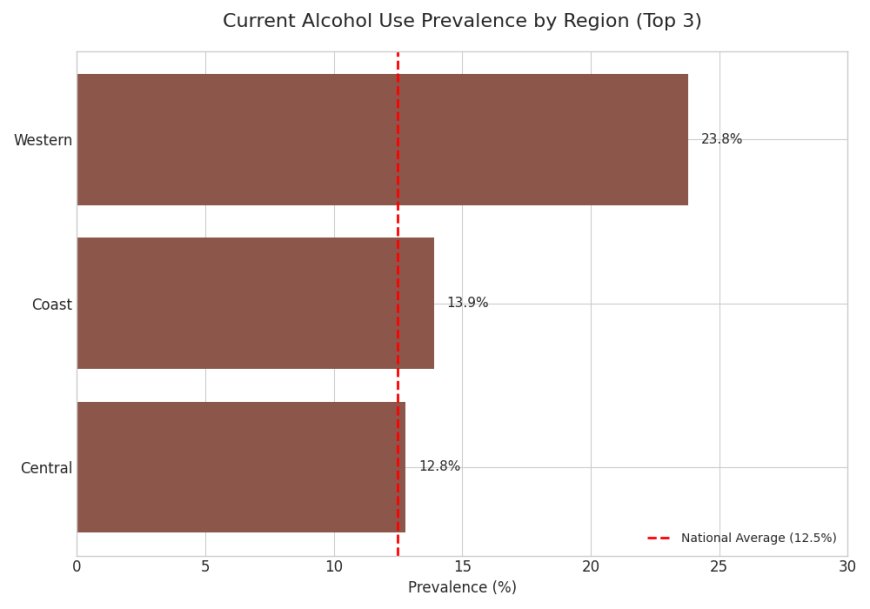 Current alcohol use prevalence by region compared to the national average. Western Kenya records the highest rates, followed by the Coast and Central regions. NACADA
“Alcohol is the most accessible substance here,” Charity notes. “Availability increases vulnerability, especially among youth and fishing communities.”
Young people remain particularly exposed. Among those aged 15 to 24, about one in eleven is already using alcohol or drugs, with the average age of initiation ranging between 16 and 20 years. More troubling is evidence that some children as young as seven and eight are being introduced to alcohol, tobacco, and cannabis.
Dependency presents an even deeper public health concern. NACADA estimates that one in every twenty Kenyans, over 1.3 million people, is dependent on alcohol.
Among current users, more than 42 per cent are classified as alcohol-dependent, a figure that underscores the scale of untreated addiction.
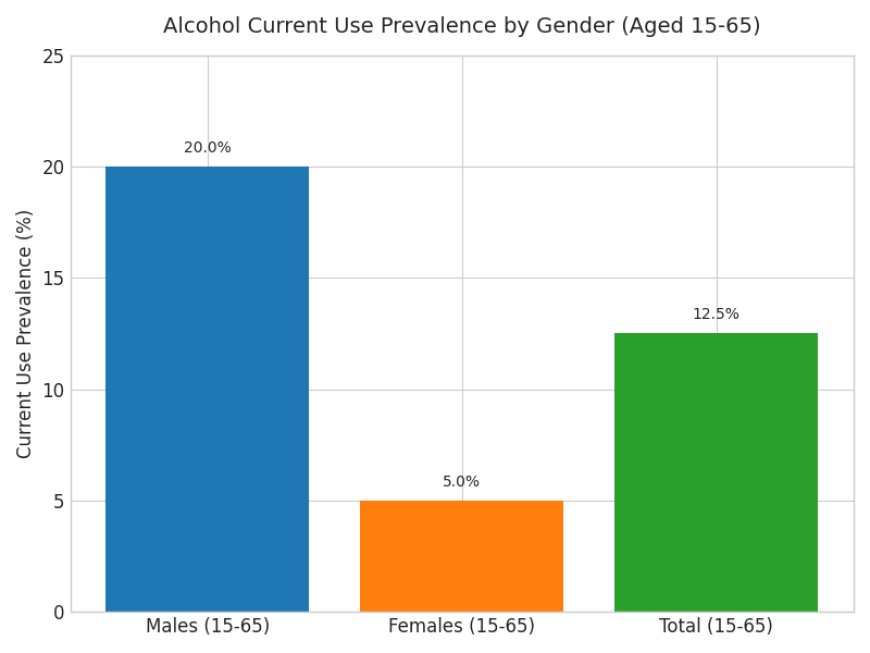
Alcohol use prevalence among Kenyans aged 15–65, showing significant gender disparities. NACADA
The consequences extend far beyond individual health. Alcohol use has been linked to high rates of road traffic injuries, with one hospital-based study in Nairobi reporting alcohol involvement in over a quarter of admitted trauma cases.
It is also associated with domestic violence, social instability, reduced school enrolment, and declining academic performance.
How Addiction Fuels Mental Disorders
According to Charity, alcohol addiction and mental illness are deeply intertwined.
“Substance use disorders affect the brain, behaviour, judgment, and emotional regulation,” she says. “Over time, they can lead to depression, anxiety, paranoia, aggression, hallucinations, and loss of self-control.”
Addiction also drives poverty and family breakdown.
“When symptoms are misunderstood as stubbornness or bad behaviour, families isolate instead of support and damage deepens.”
Depression, she adds, is now among the leading contributors to disease burden, second only to HIV/AIDS in some indices.
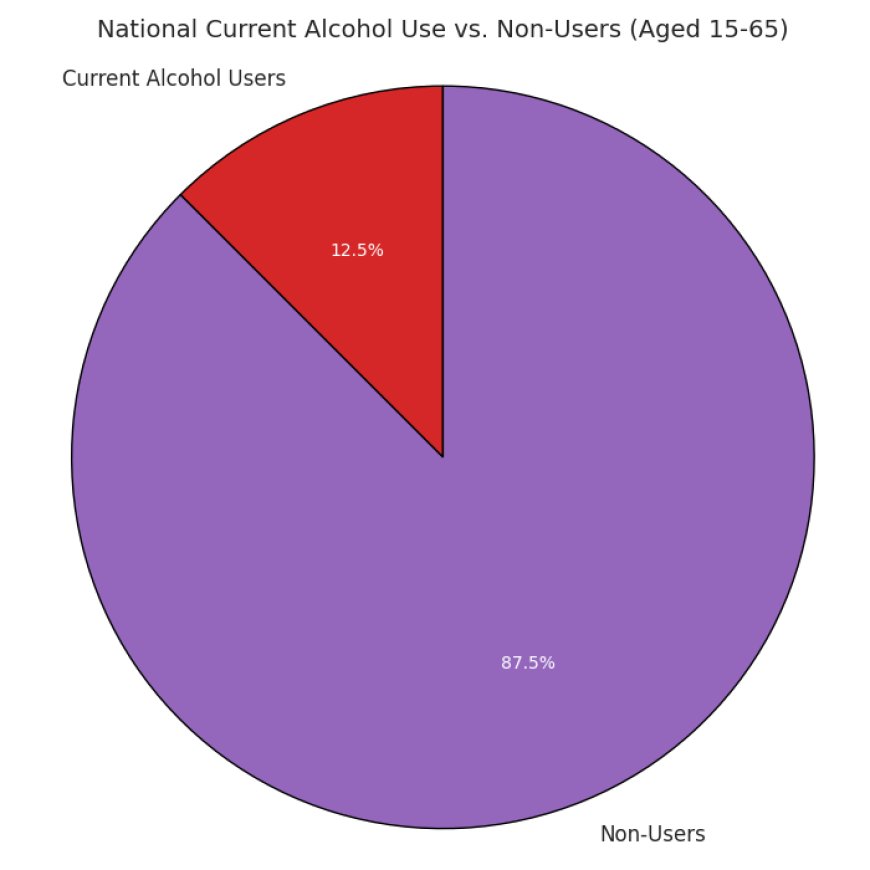
Proportion of Kenyans aged 15–65 who currently use alcohol versus non-users nationwide. NACADA
“What makes David’s approach to championing sobriety in the community impactful,” Charity says, is lived experience.
“He is not speaking theoretically. People saw him struggle. They saw him recover.”
The Sobriety Half Marathon removes isolation and stigma inviting the whole community to stand together.
“You cannot fix mental health in one session. But you can open the door,” Charity says.
For David’s wife, seeing him lead the marathon is deeply symbolic.
“It represents restoration, responsibility, and turning pain into purpose not just for our family, but for the community.”
Today, David looks back not with bitterness, but gratitude.
“I did not fall suddenly. And I did not rise suddenly either,” he says.
His mother sees the change clearly.
“I saw it. His discipline returned. His words aligned with his actions. His peace became visible,” he added.
If the marathon saves even one life, David believes it will be worth it.
“To families living with addiction,” he says, “don’t lose hope. Support with boundaries. Recovery is possible.”
What's Your Reaction?