




Kakamega Education Crisis: Underfunding Threatens Learners, Future Derailed
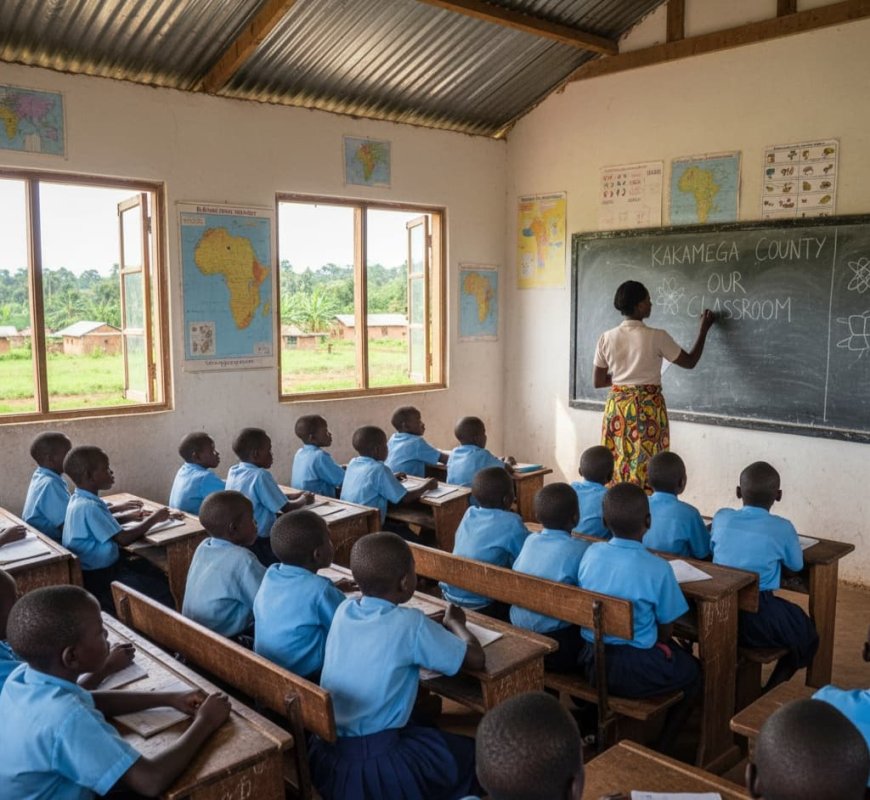
As Parliament debates the 2025 Finance Bill, education stakeholders in Kakamega County are raising the alarm over the continued underfunding of early childhood education and vocational training centres.
While the Bill aims to stabilize Kenya’s economy by avoiding steep tax hikes, it offers no direct fiscal relief for counties grappling with growing education demands.
Kakamega County, once praised for its strides in expanding access to education, is now facing what analysts call a “silent crisis.” From stalled classrooms to reduced bursaries, the situation is increasingly dire for both learners and administrators.
Audit Exposes Gaps in Public Learning Institutions
A 2024 audit report by Transparency International Kenya (TI-Kenya) revealed systemic weaknesses in Kakamega's education infrastructure. At a presentation held in Kakamega Town, Brian Kibira, TI-Kenya’s Western Region Project Officer, underscored the urgency:
“The report identifies several key areas of concern, particularly the shortage of learning materials, the need for more qualified teachers, and inadequate school facilities. The county government must act quickly to address these issues to ensure that students receive a quality education.”
The report also raised critical questions around inclusivity, pointing out that only 5% of learners in vocational training centres have disabilities, a figure attributed to poor accessibility and lack of adaptive infrastructure.
“Physical accessibility barriers and social stigma continue to hinder access for learners with special needs,” Kibira added.
Budget Cuts Undermining Progress
Recent county budget estimates show a sharp drop in ECDE infrastructure funding from Ksh 240 million to Ksh 83 million, a decision that will affect classroom expansion and child development services.
Bursary allocations have also been slashed by Ksh 60 million, reducing financial support for students from vulnerable backgrounds.
While defending the county’s approach, Dr. Boniface Okoth, Chief Officer for Education, emphasized their commitment:
“We are determined to ensure that the necessary actions are taken to improve education in Kakamega County. Education is key to unlocking opportunities, and we must work together to ensure every child has access to quality education.”
However, residents argue the situation on the ground tells a different story.
Although this latest article did not include direct interviews with teachers, numerous national media reports and education audits including those by Nairobi Law Monthly have highlighted how teachers in rural counties like Kakamega are frequently forced to purchase teaching materials from their own pockets.
In many ECDE and junior secondary schools, educators are reportedly handling basic needs such as chalk, stationery, and even sanitary products for learners' expenses that are meant to be covered by public funds.
These concerns were echoed in public participation forums held across sub-counties, where parents and education officers decried the lack of government-provided supplies and the burden placed on teachers.
At a recent community forum in Shinyalu, parents and youth expressed dissatisfaction with the county’s spending priorities, criticizing the contrast between ambitious infrastructure projects and deteriorating learning conditions.
“Why are we building luxurious county offices while our children are still learning under trees?” asked one participant during the event.
Civil society groups have since called for increased transparency in budget allocations and more citizen involvement in development planning.
While the 2025 Finance Bill avoids introducing new taxes on basic commodities, it also fails to allocate additional education-specific funds to counties, leaving them to juggle increasing demands using limited resources.
The Bill’s silence on education conditional grants means Kakamega must rely solely on equitable revenue shares and own-source revenue, both of which are unpredictable and often delayed.
Mumias East MP Peter Salasya, during a recent address in Matungu, voiced concern:
“This Bill does nothing for counties. It sidelines education completely. Rural students are the ones who will suffer the most.”
Additionally, the Public Finance Management Act restricts recurrent spending to no more than 35% of the county budget, limiting what counties can invest in teacher recruitment, feeding programs, and support staff.
A Call for Structural Change
In response, TI-Kenya has urged both levels of government to consider co-sharing educational responsibilities, particularly through Article 187 of the Constitution, which allows for the transfer of functions and resources between national and county governments.
The organization also recommends:
Increased funding for inclusive education
Stronger monitoring and evaluation mechanisms. Public disclosure of education spending
Integration of disability-friendly infrastructure in all learning institutions
As the 2025/26 financial year approaches, Kakamega’s education sector stands at a crossroads. Without urgent investment and political will, the dreams of thousands of young learners risk being derailed not by lack of ambition, but by the absence of strategic, people-centred leadership.
What's Your Reaction?