






Kenya Airways Soars to Profitability: A Ksh. 5.4 Billion Comeback After a Decade of Losses
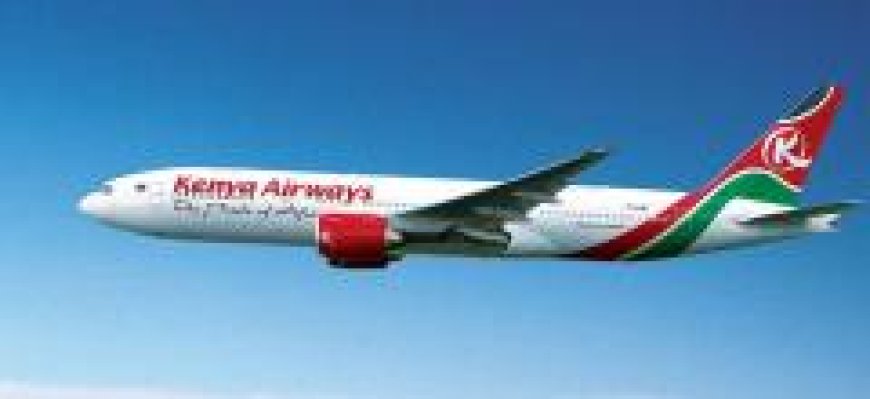
By Juliet Akoth - For over a decade, Kenya Airways (KQ) has been synonymous with financial turbulence. Losses mounted, debts loomed, and the once-proud national carrier seemed to be flying against strong headwinds. But today, the story has taken a dramatic turn, one that signals not just survival but a remarkable resurgence.
As the books closed on the financial year ending December 31, 2024, KQ recorded an after-tax profit of Ksh. 5.4 billion, a feat that hadn’t been achieved in more than ten years. Just a year ago, the airline was staring at a Ksh. 22.6 billion loss.
Now, with a staggering Ksh. 28 billion turnaround, KQ has redefined its trajectory, proving that its ambitious recovery plan, Project Kifaru, was more than just corporate jargon.
For years, the airline struggled under the weight of inefficiencies, debt, and an unpredictable global aviation market. But in recent times, KQ has been quietly reengineering itself, focusing on three critical areas: operational efficiency, streamlining costs while expanding capacity, customer experience, strengthening services to attract more passengers, and strategic investment, bringing in the right aircraft and optimizing the route network. It’s a strategy that’s finally paying off.
Turnover grew by 6%, boosted by rising passenger demand. The airline carried 5.23 million travelers in 2024, a 4% increase from the previous year. Operating profit surged by 58%, even as total costs rose by 9% due to expanded capacity.
Despite these improvements, the market remains competitive, and Kenya Airways has had to fight for every passenger. Yields held steady, meaning ticket prices didn’t shoot up despite the industry’s usual volatility.
“This is not just a financial milestone—it’s a statement,” Kenya Airways PLC Chairman Michael Joseph said while unveiling the results. “We have recorded the highest number of passengers and the highest turnover in KQ’s history. This proves our resilience and operational strength.”
For Group Managing Director and CEO Allan Kilavuka, this victory is just one step in a longer journey. “Our focus now is on securing a strategic investor,” he said. “We are actively working on capital restructuring to strengthen our liquidity and make KQ an attractive investment.”
Challenges still exist. Like many airlines worldwide, KQ has had to navigate aircraft and spare parts shortages—a global crisis that has forced airlines to rethink their fleet strategies.
But in a decisive move, the company acquired a Boeing 737-800 from Dubai Aerospace Enterprise (DAE) in February, bringing its fleet count to 35 aircraft. The 170-seater jet is expected to enhance efficiency and offer passengers more flexibility.
The airline is now setting its sights on expanding its network, modernizing its fleet, and diversifying its business segments. Plans are underway to upgrade cabin interiors, ensuring travelers experience world-class comfort. With a sharpened focus on long-term sustainability, KQ is determined to fly higher.
What's Your Reaction?