




Kenya Strengthens Science and Innovation Ties in icipe Visit
Kenya renews its commitment to science, research, and innovation during a high-level visit to icipe, aiming for socio-economic transformation.

By Janet Otieno - The meeting at icipe’s Nairobi headquarters was more than a formal courtesy, it was a moment of shared vision for Africa’s future.
Kenya’s Cabinet Secretary for Education, CS Ogamba, sat down with the Director General of the International Centre of Insect Physiology and Ecology (icipe), Dr Abdou Tenkouano, to reaffirm a commitment that goes beyond research: placing science, innovation, and human capital at the heart of Africa’s transformation.
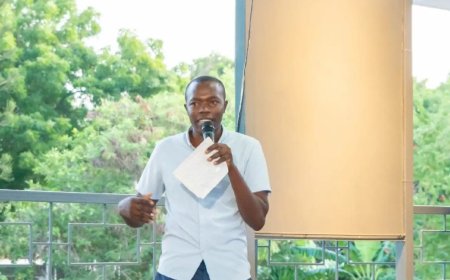
Adding a personal touch to the discussion were voices from the next generation. PASET-Rsif scholar Joshua Cyprian William and alumna Dr Ivy Okello shared their experiences, offering first-hand insights into how strategic investments in higher education are shaping African researchers and innovators. Their stories underlined a simple truth, when Africa invests in its people, it invests in its future.
As the discussions unfolded, CS Ogamba commended icipe for its remarkable legacy. “We appreciate the high-impact research that takes place at icipe and the output it produces. As Kenya, we are proud to host icipe as an international organisation for the last 55 years since it was founded by one of our pioneer scientists, Prof Thomas Odhiambo,” he said.
The CS emphasized that icipe’s influence extends far beyond Kenya’s borders, shaping policies and touching lives across Africa. He reaffirmed the government’s commitment to strengthening its mutually beneficial partnership with icipe, the only international research centre in the tropics dedicated to insect science solutions for development.
“It is befitting that the excellent work that icipe is doing has been given recognition, and in particular I wish to congratulate icipe for competitively being selected as the RCU for PASET-Rsif. I’m also grateful to icipe for excellently managing the PASET-Rsif Programme and for your exemplary performance in research as you have aptly indicated,” he stated.
CS Ogamba highlighted Kenya’s leadership in the Partnership for Skills in Applied Sciences, Engineering and Technology (PASET). “Kenya was among the first PASET countries to contribute the minimum of USD 2 million to the PASET-Rsif in 2017, thereby setting an example for other countries to join PASET.
Kenya also hosted the fourth PASET Forum in Nairobi in 2017 under the patronage of the then Deputy President, now the President of the Republic of Kenya, Dr William Samoei Ruto; and subsequently hosted the 6th PASET Forum in April 2024,” he recalled.
In response to the high demand for scholarships, the government recently committed an additional USD 2 million in 2024 to expand PhD training opportunities.
“Due to the high intake of the scholarship by Kenyans, the Government of Kenya committed an additional USD 2 million in 2024 to ensure continued support and improve the quality in higher education,” he added.
The CS stressed that quality education and research are central to Kenya’s economic development.
“I acknowledge icipe’s tremendous contribution to our research capacity and scientific output in Kenya and within the region. Going forward, we must ensure we link the outputs of research and human capital development to industry, policy, and society. Policies should be informed by credible scientific evidence of the 21st century.”
He called on industry and the private sector to embrace research outcomes and partnerships with universities and research institutions.
“Industry and private sector should also appreciate the research outcomes and collaborations within universities and research institutions to ensure better skills and a competitive workforce suitable for the 21st century demands. I am happy to note that the areas you support include energy and renewables, and other areas of artificial intelligence, the current fourth industrial revolution we are in,” he said. “Fostering academia-industry partnerships benefits society through relevant and demand-driven skills and competencies.”
He concluded by reaffirming the government’s commitment to supporting Rsif and icipe’s programmes.
Dr Abdou Tenkouano, icipe’s Director General, spoke about the centre’s role in addressing Africa’s most pressing challenges. “We are at the forefront of addressing climate risk, biodiversity loss, poverty, hunger, and unemployment through insect-based science solutions,” he said.
He emphasized that icipe’s mission aligns with Kenya’s Science, Technology and Innovation (STI) agenda. “Our work complements the Government of Kenya’s effort to position science, technology, and innovation at the heart of development.
Indeed, icipe embraces Kenya’s aspiration to become a knowledge-based economy, which depends greatly on investment in human capital, skills, and scientific research, as well as strategic partnerships that link outputs from these investments with industry and society.”
On PASET-Rsif, Dr Tenkouano shared concrete results. “A good example is PASET with its Rsif to which the Government of Kenya is contributing USD 4 million to training 41 PhDs in the country and across Africa. icipe is privileged to be the Regional Coordination Unit of PASET from 2018.” He further revealed that the PASET Governing Council had extended icipe’s mandate to manage Rsif for another three years, beginning January 2026.
Acknowledging government support, he said: “We are grateful for the trust that PASET and the Government of Kenya have for icipe. We pledge our continued commitment to PASET’s objectives of developing skills in advanced sciences, engineering, and technology for Africa’s socio-economic transformation.”
Dr Tenkouano thanked Kenya for its continued investment in PASET and icipe, noting that this pan-African science fund stands as one of the continent’s best examples of collaboration in doctoral training, research, and innovation.
“Following your leadership, several other African countries have contributed to Rsif, including Benin Republic, Burkina Faso, Côte d’Ivoire, Ethiopia, Ghana, Mozambique, Nigeria, Rwanda, and Senegal,” he said.
He also urged more African governments to increase investments in scientific research, particularly in light of declining overseas development assistance. He highlighted icipe’s model of operation, which relies on young talent from across Africa and beyond, most of whom pursue MSc and PhD degrees at Kenyan universities.
Dr Tenkouano also spoke about icipe’s unique role in science diplomacy. “As they get immersed in our research environment with a 96 per cent completion rate, they also experience Kenya’s rich cultural diversity.
When they return home, they carry not only their degrees but also the hospitality ofuhu Kenya in their hearts. They become bona fide ambassadors of Kenya. This is why icipe prides itself on being part of the science development diplomacy of Kenya.”
The visit ended on an optimistic note. Both the Cabinet Secretary and icipe Director General underscored a shared belief: science, research, and innovation must remain at the core of Africa’s progress. Their message was clear, investing in human capital and research is not optional; it is essential for Africa to compete and thrive in the 21st century.
What's Your Reaction?