










Kenya Takes Center Stage as UNEA-7 Confronts Global Environmental Crises
Kenya steps forward at UNEA-7 in Nairobi, rallying global leaders to confront rising climate, pollution, and biodiversity crises while pushing Africa’s environmental priorities.
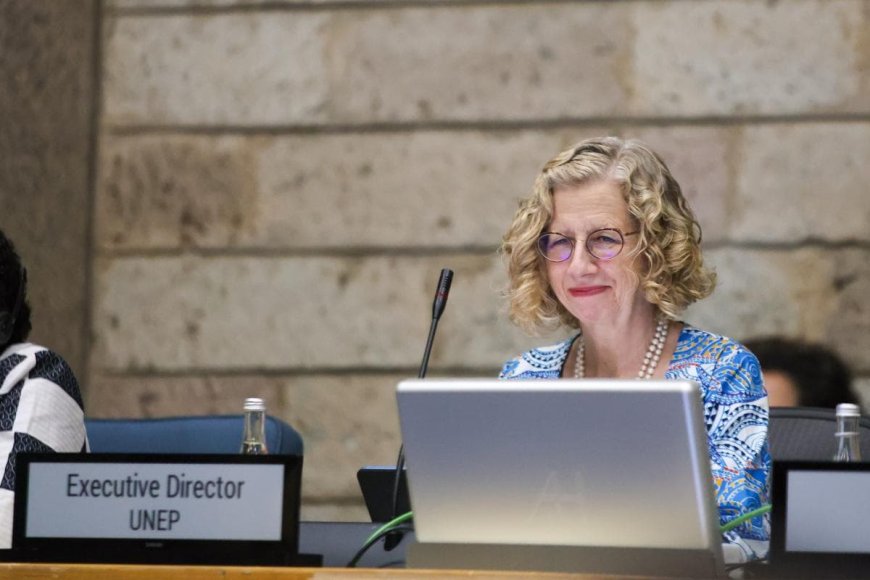
By Thuku Kariuki - As global attention turns to Nairobi this week, representatives from more than 170 countries have arrived for the seventh session of the United Nations Environment Assembly (UNEA-7), the world’s top decision-making body on the environment.
Thousands of delegates, including ministers, heads of state, scientists, civil society leaders and activists, are gathering at the headquarters of the United Nations Environment Programme (UNEP) in Gigiri to confront what experts describe as converging planetary crises hitting communities across the world.
UNEA-7, which runs from December 8 to 12 under the theme “Advancing sustainable solutions for a resilient planet,” comes at a moment when climate change, biodiversity loss, pollution and waste are no longer separate emergencies but interconnected threats pushing natural systems toward dangerous tipping points.
UNEP has warned that 2024 and 2025 are shaping up to be years marked by record heat, worsening pollution, rapid species decline and escalating climate-related disasters, trends felt across Africa, Asia, the Americas and small island nations with equal intensity.
“This is also a year in which the world remained off track on efforts to slow climate change, to halt biodiversity loss and land degradation, to deal with plastic pollution,” UNEP Executive Director Inger Andersen said ahead of the meeting.
“So, this is what we must do: deliver solutions that spark stronger, faster action on the three planetary environmental crises.”
Delegates will be debating 15 draft resolutions and three draft decisions on issues that cut across scientific, political and economic lines.
These include proposals on protecting melting glaciers, safeguarding deep-sea ecosystems, managing minerals and metals more sustainably, addressing harmful seaweed blooms, enhancing wildfire prevention and reducing the growing environmental footprint of artificial intelligence, a fast-rising concern given the massive energy, water and mineral demands of data centres and new technologies.
UNEP hopes the negotiations will lead to coordinated action rather than isolated responses that leave gaps in global governance.
Beyond the resolutions, Nairobi is also hosting several key global moments tied to UNEA-7. On December 9, UNEP will launch the seventh edition of the Global Environment Outlook (GEO-7), a flagship scientific report produced by nearly 300 experts from more than 80 countries.
The GEO-7 assessment is expected to paint a stark but solution-oriented picture of the planet’s health, mapping out practical pathways across finance, energy, food systems, circularity and waste.
The Assembly will also feature a high-level segment where presidents and prime ministers are set to address the world, as well as the announcement of the 2025 Champions of the Earth awards, which honour outstanding environmental leadership.
For Kenya, UNEA-7 is both a diplomatic moment and a demonstration of its growing role in environmental governance. As the host country of UNEP for more than 50 years, the only UN headquarters in the Global South, Nairobi has become a central hub for environmental diplomacy.
Speaking to the press ahead of the Assembly, Cabinet Secretary for Environment, Climate Change and Forestry Deborah Barasa said Kenya is “honoured to facilitate this important gathering of ministers and world leaders on environmental matters.”
She emphasised that Kenya will amplify Africa’s priorities, adding, “We are championing Africa’s collective voice at UNEA-7. We must push for fair partnerships, equitable financing and solutions that recognise the unique challenges facing developing countries.”
Barasa said that Kenya is showcasing strong leadership on antimicrobial resistance, measures to address the environmental impacts of AI, and youth inclusion in decision-making, issues she said reflect Kenya’s belief that environmental governance must evolve with global realities.
“Africa cannot be left behind in these conversations,” she noted, adding that UNEA-7 should produce outcomes that consider Africa’s development needs while still accelerating global action.
Despite some progress since UNEA-6, including the establishment of a new global science-policy panel on chemicals, waste and pollution and the entry into force of the high-seas biodiversity treaty, UNEP admits that current efforts are far from sufficient. Multilateral action remains slow, fragmented and often under-financed.
This Assembly is therefore being watched closely as a test of whether global leaders can bridge the gap between scientific warnings and political action. Delegates are expected to face difficult negotiations on issues such as resource use, climate justice, financing, technology transfer and the responsibilities of high-emitting countries.
Youth movements and civil society groups are also making their presence felt. The Youth Environment Assembly is taking place alongside the main conference, offering a platform for young activists and innovators from around the world to push for accountability and stronger action.
UNEP has also organised a Multilateral Environmental Agreement Day to encourage better coordination among the many global treaties covering climate, biodiversity, oceans and chemicals, a push driven by concerns that fragmented efforts are slowing progress.
As the discussions enter full swing, the question hanging over UNEA-7 is whether governments will match their warnings with real commitments.
Andersen has urged delegates to deliver “real solutions to real-world problems,” while Kenya, through Barasa, is calling on the world to move beyond statements and adopt practical measures that can be implemented on the ground.
Observers note that while UNEA resolutions are not legally binding, they often shape future treaties, national laws and funding priorities.
What's Your Reaction?