











Kenya Youth Lead Climate Action Through Innovation and Community Empowerment.
Young Kenyans are taking the lead in climate action through innovation, education, and community-driven solutions showcased at the Climate Action Summit in Nairobi.
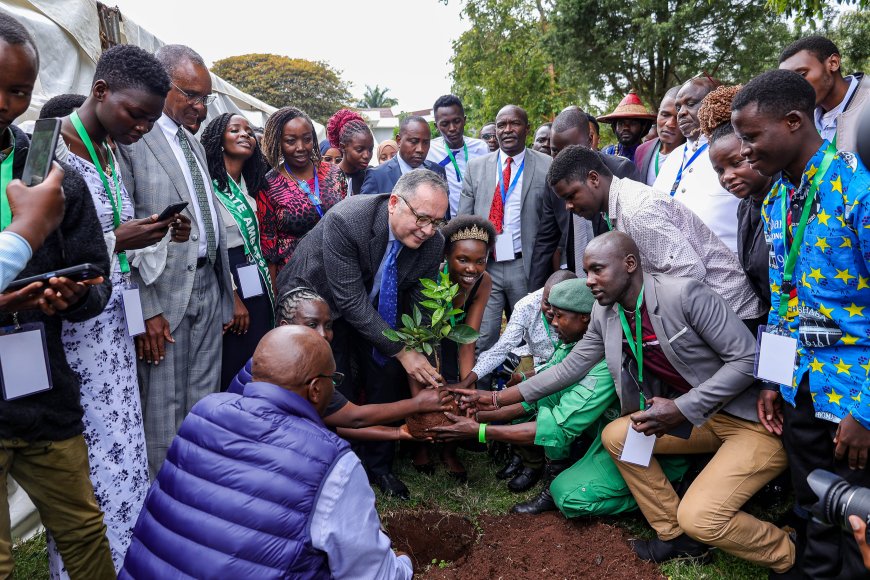
By Thuku Kariuki and Daniel Furnad - From rising seas to shrinking forests, the world is waking up to the urgency of climate action. And right in the heart of Africa, Kenya stands out, a nation blessed with vibrant ecosystems and a growing reputation as a home for environmental changemakers.
It’s also the land of the late Nobel Peace Prize laureate Wangari Maathai, whose Green Belt Movement planted not just trees, but hope in the hearts of generations.
While global climate summits often steal the spotlight, it’s the smaller, grassroots gatherings, like the recent, that spark the real conversations and inspire lasting change.
Held from October 28th to 31st, the Climate Action Summit brought together more than 400 participants representing national and county governments, academia, civil society, and the private sector.
Special emphasis was placed on youth engagement, recognizing their crucial role in driving the future of climate action.
The Summit aimed to prepare Kenya for the upcoming COP30 conference in Brazil, while also fostering partnerships and collaboration among local stakeholders. By facilitating dialogue between diverse groups, organizers hoped to generate concrete initiatives that will help Kenya and Africa at large adapt to the realities of climate change.
Key discussions revolved around policy coherence, leadership synergy, and localized climate action. Participants explored strategies to reduce emissions, strengthen resilience, mobilize climate finance, and scale up youth-led innovations supporting the low-carbon transition.
 Delegates attaending the Climate Action Summit at the Kenya School of Government photo Thuku
Innovation and information-sharing emerged as the driving forces throughout the sessions. On Day 3, participants explored the importance of climate literacy, how knowledge and education can transform lives, from promoting resilient crops to integrating indigenous knowledge in weather forecasting.
Kenyan institutions showcased practical contributions to environmental improvement. The University of Nairobi’s Tuwe Pamoja Project in Mathare, for example, uses nature-based solutions to restore and sustain informal communities, with ambitions to expand to more settlements across Nairobi.
The project focuses on building community capacity, creating livelihoods, and ensuring that policies translate into tangible benefits for people and the planet.
A Young Voice of Change
Among the most inspiring speakers was 13-year-old Nicole Sanyu, the reigning Little Miss Pre-Teen Kenya. Through her Waste Goals Project, Nicole is leading waste segregation initiatives in schools and churches across Kikuyu.
Her project advances SDG 5 (Gender Equality) and SDG 13 (Climate Action) empowering young people to take responsibility for their environment.
 13-year-old Nicole Sanyu, the reigning Little Miss Pre-Teen Kenya speaking at the Climate Action Summit Photo Thuku
Through eco clubs in schools such as Kadeng’wa, Utafiti, Fairlawns, Kerwa, Nguriunditu, and Alliance, Nicole encourages students to set up segregation bins for organic, recyclable, and non-recyclable waste, turning organic waste into compost for tree planting.
“I see a brighter, greener future for our environment and a safer planet for our generation,” she shared during the Women and Children panel at the Summit.
Justice Oscar Angote, a distinguished judge of Kenya’s Environmental and Land Court, contributed key insights on the legal side of climate action.
He emphasized that climate justice is both a moral and legal imperative, grounded in the Constitution of Kenya. Justice Angote highlighted the need for equitable sharing of the benefits of climate action and underscored the state’s duty, including county governments, to protect the environment and ensure sustainable use of natural resources.
The Kenya Institute for Public Policy Research and Analysis (KIPPRA) was another leading voice at the Summit. It hosted a lively side event focusing on equipping youth with practical skills in stakeholder management and public participation for effective climate action.
Facilitated by Victor Mose, Acting Head of KIPPRA’s Capacity Building Department, the session brought together young leaders and policy enthusiasts from across the country.
Mr. Mose emphasized that inclusive participation strengthens policy ownership, accountability, and the long-term sustainability of climate interventions.
As the Summit concluded, delegates issued a united call to action, urging national and county governments, development partners, the private sector, civil society, women, and youth to align their efforts toward a shared vision of a climate-resilient Kenya.
They resolved to ensure that climate governance remains people-centered, inclusive, and guided by science, securing a sustainable, equitable, and prosperous future for generations to come.
If the late Wangari Maathai were watching from above, she would surely smile at the sight of Kenyans, young and old, uniting to protect the environment, a cause that was always so close to her heart.
What's Your Reaction?