





Vihiga’s Maragoli Hill Beekeeping Saves Forest and Boosts Local Livelihoods
Scarred by logging, Vihiga's Maragoli Hill is fighting back. Discover how community reforestation efforts and innovative beekeeping are restoring the forest and creating vital livelihoods.
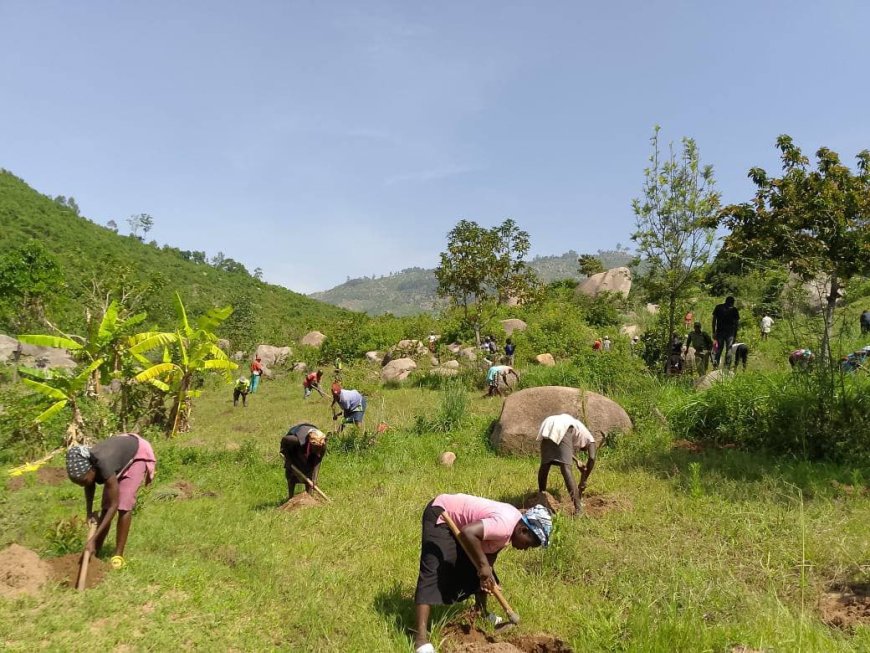
Maragoli Hill Forest in Vihiga County covers approximately 483 hectares. For decades, it supported wildlife, sustained local farming, and acted as a critical water catchment for surrounding communities.
Today, scars of deforestation are still visible. Large sections of the hill remain rocky and exposed, a result of uncontrolled tree cutting largely driven by personal gain. The once-thriving forest that regulated rainfall, provided shade, and nurtured crops now struggles to recover.
Streams have dried up, crop yields have fallen, and temperatures have risen, leaving residents to face increasingly erratic rainfall patterns. What was once a source of pride for Vihiga County has become a cautionary tale of environmental neglect.
Independent satellite data shows that forest destruction in the county is not only historical but ongoing. According to Global Forest Watch (GFW), Vihiga lost approximately 720 hectares of tree cover between 2001 and 2024, equivalent to 6.0 per cent of the tree cover that existed in 2000.
While county authorities cite progress toward 37.5 per cent total tree cover and 15 per cent forest cover, GFW data from 2020 shows that natural forest, the dense, biodiverse ecosystems critical for climate regulation and water retention, covers only 6.0 per cent of the county’s land area.
Recognizing that tree planting alone cannot guarantee long-term forest survival, the County Government of Vihiga, in collaboration with national agencies and development partners, introduced a complementary solution: apiculture.
David Muyela, a beekeeper from Vihiga, has become a central figure in this initiative. He manages 128 beehives across his farm, including within and around Maragoli Hill Forest.
According to Muyela, beekeeping supports forest restoration in two critical ways: it creates incentives for residents to plant and protect flowering trees, and the presence of bees discourages illegal logging by naturally defending their colonies.
“Beekeeping requires little capital, small space, and minimal security. It can generate income for both young and older people while helping restore the forest,” Muyela explains.
Muyela harvests between 10 and 15 kilograms of honey per hive, selling it at approximately KSh 1,000 per kilogram. He notes that new farmers should expect at least eight kilograms per hive, adding that poor hive construction or placement in cold, heavily shaded areas reduces productivity. “A hive should be placed in a well-constructed, open structure with enough sunlight,” he emphasizes.
Despite its benefits, apiculture has faced scepticism. Many residents fear bee stings, while others doubt the profitability of honey farming.
To address this, the county government, with support from the Food and Agriculture Organization (FAO), has embarked on widespread sensitization, capacity building, and awareness campaigns. FAO plans to add 200 beehives to complement those already supplied by the county.
The County Government of Vihiga has partnered with multiple stakeholders, including the Ministry of Energy, Kenya Defence Forces, Office of the Prime Cabinet Secretary, Kenya Airways, Kenya Aviation Authority, KeRRA, Kenya Power, the Catholic Justice and Peace Department of the Diocese of Kakamega, and the Mulembe Women Caucus, to support continuous reforestation.
Officials say nearly half of Maragoli Hill Forest has begun to regain vegetation, gradually restoring parts of its water catchment function.
To strengthen conservation, the county has constructed two apiaries within Maragoli Hill Forest and supplied 160 beehives to the Maragoli Community Forest Association (CFA). Ranger housing and an office block have also been built to improve coordination between the Kenya Forest Service and the CFA.
“We are training community groups and individuals on tree nursery establishment as a source of livelihood. The county purchases indigenous tree and bamboo seedlings for restoration, which helps generate income for local residents,” says Mudaki Donald, a county forestry officer.
Dr Betty Mulianga, Vihiga’s Chief Officer for Agriculture, has encouraged residents to embrace apiculture, citing its lower start-up costs compared to dairy, piggery, or shoat rearing. She has called for policy support, honey processing facilities, expanded markets, and value addition for hive products.
Under optimal conditions, a beehive can produce its first harvest in seven to eight months, with subsequent harvests every three to four months. Farmers are encouraged to plant diverse indigenous tree species to provide nectar, improve honey quality, and enhance forest restoration.
“The quality of honey depends on tree diversity. Honey from multiple species is darker, sweeter, and has medicinal value for wound healing and recovery after surgery,” Muyela says.
He also advises planting bamboo to moderate temperatures for bees and eucalyptus (blue gum), which contributes to honey with menthol properties that can relieve coughs.
Community response has been gradually positive. Some residents, initially hesitant due to fear of bee stings, have begun participating in nursery establishment and placing hives within Maragoli Hill Forest. The initiative not only protects the forest but also provides sustainable livelihoods, ensuring that environmental conservation and economic benefit go hand in hand.
The County Government of Vihiga is also exploring eco-tourism as a sustainable income stream, allowing communities to benefit financially from a healthy forest. By integrating apiculture, indigenous tree restoration, and eco-tourism, the county aims to create a system where conservation and livelihoods reinforce each other.
But as satellite data continues to show ongoing forest loss, the success of Maragoli Hill’s recovery will depend not just on how many trees are planted, but on how well natural forests are protected and how deeply communities remain economically and socially invested in their survival.
What's Your Reaction?