




When Health Cover Fails Women Struggling to Afford Reproductive Care
Women in Kenya's informal sector struggle to access reproductive healthcare as financial barriers and gaps in SHA coverage delay essential care.
By John Mwilwatsi - For many women and girls in Githurai, accessing sexual and reproductive healthcare is not simply a matter of walking into a health facility. The absence of a formal payslip, a stable income, and reliable health insurance determines whether they receive timely care or postpone treatment altogether.
From family planning and maternal healthcare to treatment for reproductive health complications, the cost of services, medicines, consultations, and transport continues to place a heavy burden on households surviving on irregular daily wages.
Under Kenya’s Social Health Insurance Fund (SHIF), formal sector workers have their contributions deducted automatically from their monthly salaries. Informal workers, who make up over 80 percent of the country's workforce, must manually remit a flat Ksh 300 per month on their own, a system that assumes a regularity of income many simply do not have.
For women like Mercy Wambui and Mary Wanjiku, that gap between formal and informal coverage isn't an abstract policy debate; it is the difference between getting care and going without it.
Surviving on Daily Cash Flow
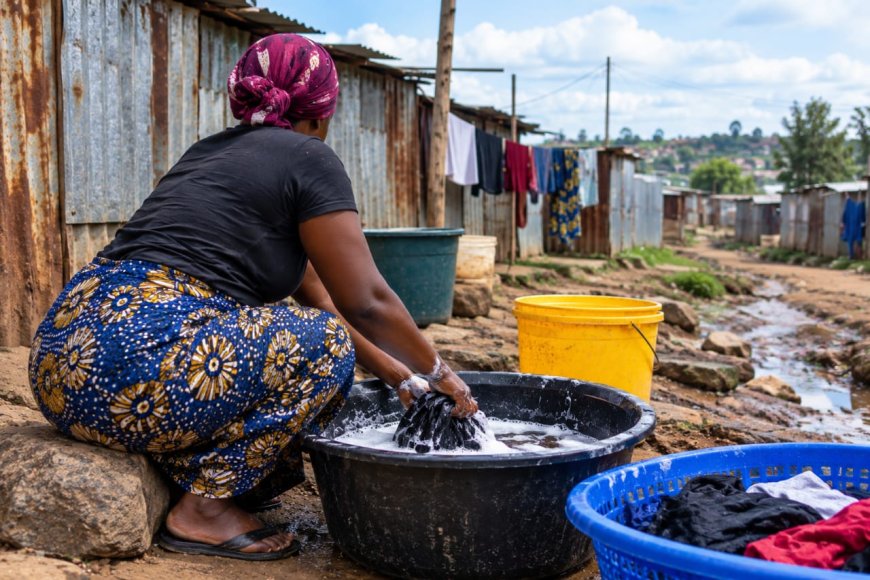
At 22, Mercy Wambui is already navigating the demands of motherhood, casual work, and another pregnancy. She lives in an informal settlement in Githurai 44, Kiambu County, where she survives by washing clothes for neighboring households.
Her work offers no guaranteed income. "On a typical day, I can earn as little as Ksh 300, depending on whether I find someone who needs my services. There is no payslip at the end of the month, no fixed salary, and no assurance that the following day will bring another paying client," Wambui said.
As a single mother to a four-year-old daughter, every shilling she earns is stretched between food, shelter, and basic survival. A visit to a clinic comes with a difficult calculation.
"I am a single mum. If I go to a clinic, my daughter eats less, since I exhaust all the cash at hand,” Wambui said.
Wambui, now two months pregnant, explained that her experience with her first pregnancy at age 16 shaped her decision to seek family planning early on.
"When the father of my baby denied the pregnancy, I had no choice but to carry what I call a burden by myself," she recalled. She previously visited a Marie Stopes clinic in Nairobi to obtain a copper intrauterine device (IUD) to space her pregnancies.
"The government tells us on the radio that healthcare is now equal under the new system. But when I walk into a clinic without a payslip or money in my M-Pesa, nobody asks about my health. They ask for a receipt," she added.
Wambui’s struggle reflects a widespread reality. The rollout of SHIF, administered by the Social Health Authority (SHA) to replace the legacy National Hospital Insurance Fund (NHIF), was designed to achieve Universal Health Coverage (UHC). Yet for millions of non-salaried Kenyans, structural barriers to entry remain.
Financial Barriers and Unsafe Alternatives
For Mary Wanjiku, a mother of one living in Githurai, the gaps in health coverage had severe consequences.
Wanjiku stated that she was sexually assaulted during the Gen Z public protests and later discovered she was one month pregnant. She opted to seek an abortion.
"When I visited a health facility to use my SHA cover, I was informed that I could not use it for the service and would have to pay in cash," Wanjiku said.
With no regular salary and already struggling to meet basic daily needs, the out-of-pocket cost quoted by the facility was far beyond what she could afford.
"I resorted to obtaining medication over the counter in an attempt to end the pregnancy," she shared. While the self-administered procedure ended the pregnancy, Wanjiku cautioned other women against taking similar risks: "I managed to terminate the pregnancy, but I advise, if there is need for such a decision, visit a qualified medical practitioner or facility for consultation."
Despite making efforts to stay insured, Wanjiku found the financial safety net absent when she needed it most.
"The Ksh 300 that I pay monthly through the Lipa SHA Pole Pole plan is itself a heavy financial commitment. Yet when I needed care, the cover did not provide the assistance I expected," she said.
Juma (not his real name), a registered clinical officer practicing at a Githurai health facility, noted that cases like Wambui’s and Wanjiku’s illustrate the dangers of severe out-of-pocket healthcare expenses.
"Women who depend on casual employment often delay seeking medical attention because attending a health facility means losing a day's income," Juma said. He strongly cautioned against purchasing over-the-counter abortifacients without clinical guidance. "Women experiencing unintended or complicated pregnancies must seek care from a qualified practitioner to evaluate their options safely."
The Policy Divide: Fixed Rates vs. Fluctuation
Under the Social Health Insurance Act, formal sector workers have 2.75 percent of their gross salary automatically deducted by employers. Informal workers must self-remit a baseline minimum of Ksh 300 per month.
While Ksh 300 appears small on paper, requiring informal workers to manage voluntary digital payments creates persistent access hurdles.
"Formal employment provides an automatic safety net where insurance is seamless," explained Jane Mungai, a local community health officer. "In informal settlements, income is volatile. If a mother has to choose between paying an insurance premium or buying food, the premium loses every time. When her insurance lapses, so does her access to vital sexual and reproductive health services."
National health statistics reflect this reality on the ground. Data from the Kenya Demographic and Health Survey (KDHS) shows that financial constraints are the single largest barrier preventing low-income urban women from accessing timely care.
According to the KDHS, 46.0 percent of Kenyan women aged 15–49 cited obtaining money for treatment as a serious problem when sick, while 52.4 percent reported at least one major structural barrier to accessing healthcare. Among urban women specifically, 37.1 percent identified treatment costs as a primary obstacle, a figure that rises to 46.5 percent among unemployed women.
The Government's Stance and the Push for Reform
Government officials maintain that the new health framework was engineered to protect vulnerable populations rather than burden them.
Under Legal Notice No. 56 of the Social Health Insurance Act, the Ministry of Health gazetted a universal benefits package. Under the Primary Healthcare Fund, every citizen enrolled in a local Primary Care Network (PCN) is entitled to outpatient consultations, diagnostics, maternal-child care and chronic disease management funded at Ksh 900 per person annually.
SHA Board Chairperson Dr. Abdi Mohamed emphasized that the system's baseline income-assessment models were deliberately tuned to assist low earners.
"More than 30 million registered Kenyans are entitled to free primary healthcare funded through general taxation, whether or not they contribute directly to SHIF," Dr. Mohamed stated, highlighting services including outpatient care, basic laboratory diagnostics, and emergency treatment.
"The system was designed to underestimate incomes rather than overestimate them, specifically to avoid placing financial pressure on vulnerable households."
To ease the payment burden for non-salaried earners, the government introduced installment options.
According to SHA Chief Executive Officer Dr. Mercy Mwangangi, the Lipa SHA Pole Pole initiative allows informal workers to remit contributions in flexible daily, weekly, or monthly micropayments.
"We must show Kenyans exactly how their contributions translate into improved services.This includes sharing performance reports detailing the exact health outcomes we are pursuing," Dr. Mwangangi said.
Supporting the rollout, Interior Principal Secretary Raymond Omollo urged public compliance, noting that health insurance protects families from catastrophic financial depletion, such as distress-selling livestock or small businesses to cover medical bills.
Addressing concerns over means-testing accuracy, Dr. Daniel Mwai, Presidential Advisor on Health Financing, noted that the model was grounded in field data from tens of thousands of households.
"It was refined through ground-truthing across eight counties, including Nairobi, physically visiting over 2,000 households to reconcile estimated income algorithms against actual living conditions," Dr. Mwai explained.
While health administrators acknowledge that the transition from NHIF to SHA faces operational challenges, they insist the framework represents a necessary structural shift toward universal coverage.
However, community health advocate Jane Mungai warns that without targeted protections for reproductive healthcare, the current policy structure risks eroding hard-won gains in family planning and maternal health uptake among informal workers.
For women living on daily wages in Githurai, policy promises must translate to affordability at the clinic reception desk. Until the gap between volatile informal earnings and fixed health contributions is bridged, accessible healthcare remains an unfulfilled promise when it matters most.
What's Your Reaction?