




Women in Laikipia Lead Land Restoration Efforts and Empower Their Communities

By Melisa Mong'ina - In many rural communities, women’s roles have traditionally been limited to the home and family, with little opportunity for leadership or recognition beyond the domestic cycle.
However, in the heart of Laikipia, Kenya, a growing number of women are breaking these traditional norms and stepping into leadership positions, particularly in conservation and land restoration.
Despite the hardships, these women have managed to come out strong and resilient. They have come to understand their rights and capabilities as women in a male-dominated community.
At the forefront of this movement is Angeline Leyangere, a rangeland coordinator in Naibunga Conservancy, Laikipia County, whose leadership is inspiring a new generation of women to step into roles traditionally dominated by men.
At first, she experienced resistance from her community due to her gender. The community used to view women as weak and less capable of handling such demanding tasks. Over time, through perseverance and by proving her abilities, Angeline was able to fit in and gained respect for her role.

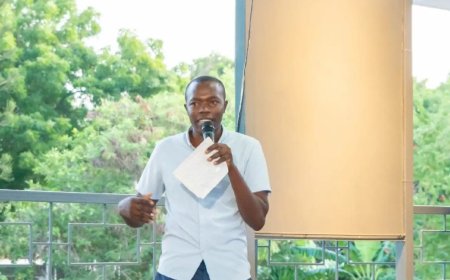
Angeline Leyangere, Rangeland Coordinator in Naibunga Conservancy, Laikipia County/Beverline Isaboke
“In our community, women didn't have many rights. Their role was mainly to stay at home and raise children. When I began this work, it was difficult because no one acknowledged me,” she narrated.
She added, “As a woman, I was considered less than the men. They often downgraded me and dismissed my ideas and opinions on conservation. The involvement of Wyss Academy helped change men's perspectives toward me, and I was accepted in the rangeland work. Now, I have gained recognition in this work, and many more women have joined.”
As a rangeland coordinator, Angeline is responsible for protecting the rangeland by implementing practices such as building semi-circular bunds to control water and soil, thereby conserving the environment. These semi-circular bunds help conserve grass and prevent soil erosion, which are crucial for the sustainable management of the rangelands.
“As a coordinator, my role is to engage the community in sustainable rangeland management. We promote good practices like grazing plans and conservation efforts. Under conservation, we encourage the community to build semi-circular bunds to conserve grass and prevent soil erosion. This project has brought unity to both Naibunga and Oldonyiro, and now, women's voices are being heard,” she said.
The building of the semi-circular bunds was introduced by Green Earth Warriors, a youth-led organisation. The project, supported by Wyss Academy for Nature, provided training for women in the community. The training included practical skills such as using tools and techniques necessary for the creation of the bunds.

“Before we began constructing the semi-circular bunds, Wyss Academy supported us with training. We then started training other women in the community. Now, many of them have acquired the knowledge and skills to do the work. We were trained at our women's common sites on the types of tools to use, how to use them, and how to plant the seeds within the buns,” Angeline added.
Her involvement in land restoration has inspired many women in her community to take on leadership roles in conservation efforts. Initially, the number of women involved was low, but with training and financial support, participation grew unexpectedly.
Angeline shares that the numbers are increasing, with approximately 2,000 women involved in the construction of the semi-circular bunds across three community lands.
She notes that women's groups such as Twiga Mama have been actively working on land restoration, and the initiative depends on the size of land each group has, with the expectation of completing approximately 2,000 bunds by the end of 2024.
“The number of women involved in this project has increased to approximately 2,000. We have three community lands, and each has built more than 5,000 semi-circular bunds. As a member of Twiga Mama, our group aims to dig about 2,000 bunds, depending on the size of land available. So far, we have managed to build 500 bunds at our common site,” explained Angeline.
As women's involvement in conservation grows, some still face difficulties at home. They experience resistance from their husbands or families.
Angeline notes that some women in the community continue to face challenges when leaving their homes to work on land restoration. Some encounter conflicts with their husbands, while others struggle to balance their family responsibilities.
“Some women still face challenges at home. Many men don’t like it when their wives are away for more than two hours. If a woman comes home late, some are sent away and told not to return. Others struggle to balance family and work responsibilities, and for some, poverty makes it difficult to stay focused on their work,” she shared.
Every problem has a solution. Angeline discusses the effort made to gain men's support. Men have been educated on the importance of conservation work and have witnessed its benefits in the community and their own households.
Financial support and the continued success of the project have helped motivate both women and men to recognize the value of land restoration and its long-term benefits.
“Our first step was to educate them about the importance of land restoration and its benefits not only to the community but also to their families. They were also encouraged by the small income their wives began to earn from building the bunds,” she said.
She shares how the modest income they receive from the project has helped cover essential needs such as food, clothes, and education for their children.
Angeline emphasizes the importance of women earning their own income and not relying solely on men. She highlights the key role women have played in collaborating across communities, taking initiative, and supporting each other.
“As women, our common site is used as a conservation area where we keep beehives for honey. During the dry seasons, we collect and sell dry grass to nearby villages. We also harvest and sell the seeds,” she explained.
She added, “The income from our honey, seeds, grass, and bund building helps us with essential needs at home such as food, clothes, and paying for our children's education. I encourage women to work and earn their own money and not rely entirely on their husbands.”
She emphasizes how the project has allowed them not only to improve their local environment but also to broaden their horizons, giving them a sense of recognition in their communities.
“This project has given women leaders recognition. It has also opened doors for us to connect with other communities and gain wider exposure,” said Angeline.
Her journey is a testament to the power of perseverance, community support, and the transformative potential of women in leadership, particularly in rural areas where the challenges are often greater, yet the impact of their work can be life-changing.
According to Sheila Funnell, Head of Impact and Innovation at Wyss Academy for Nature, based in the East Africa Hub in Nanyuki, Kenya, the primary goal of the initiative was to increase pasture production in the region, particularly in degraded rangelands.

Sheila Funnell, Head of Impact and Innovation, Wyss Academy for Nature
“The semi-circular bund initiative is about increasing pasture production in this landscape. It is a technique that is used to enhance water stored within the soil.”
Funnell highlights that the youth group, who are the primary drivers of the project, were trained by Just Dig It to learn the technical aspects of creating semi-circular bunds. They later became knowledge bearers and trainers within their community.
“The expertise brought on by Just Dig It was passed on to the youth group through intensive training sessions, and they became knowledge bearers of the technique and were then able to train others beyond themselves,” she shared.
The youth group has been actively involved in educating other groups, such as women’s groups and additional youth groups, on how to implement the technique. Their continued role as trainers has allowed the initiative to expand beyond its original scope.
“The youths became trainers of trainees within their community. This started two years ago, and they are still very active today, training their wider community, other youth groups, women’s groups, and others within the landscape to implement the activity,” said Funnell.
Menita Kupano, Co-founder and Project Manager at Green Earth Warriors, a youth-led organization located in Naibunga, Laikipia County, describes the organization’s efforts to improve land through a technique known as semi-circular bunds, which is designed to reduce water runoff, promote soil moisture retention, and encourage plant growth.
 Menita Kupano, Co-founder and Project Manager at Green Earth Warriors/photo Beverline Isaboke
“Our organization mainly focuses on land restoration and the pacification of land. For land restoration, we are using a technique called semi-circular bunds, also known as half-moons or smiling earth, to slow down runoff, allow filtration, and retain soil moisture so that grasses and other botanist plants may sprout with ease,” shared Kupano.
Women made up 70% of the workers who constructed the initial bunds. Menita highlights that women played a crucial role in the project’s success, and empowering them,
along with youth groups—was key to its progress.
“Initially, we started by engaging women, and 70% of them dug the first 5,123 semi-circular bunds across the six pilot sites. This made us see them as catalysts for change, and it prompted us to fully empower them alongside the youth. As of now, we have around 30 women’s groups and several other organized youth groups doing the same project,” shared Kupano.
Kupano explains that they offered training to the women before starting the project. The training covered practical skills such as constructing the bunds and monitoring their progress. Additionally, participants received training in governance and management to ensure the sustainability of the restoration work.
“We mostly train them on how to create the semi-circular buns, how to monitor them, and even how to assess their development. We’ve also given them the governance aspect, so we’re not only restoring the land, but managing it effectively to ensure long-term success,” said Kupano.
What's Your Reaction?