




Youth Take the Lead as Kakamega Forest Gets a New Lifeline
In Kakamega Forest, Kenya’s last tropical rainforest, youth are stepping up with science, community action, and global allies to restore a fragile ecosystem and secure livelihoods.
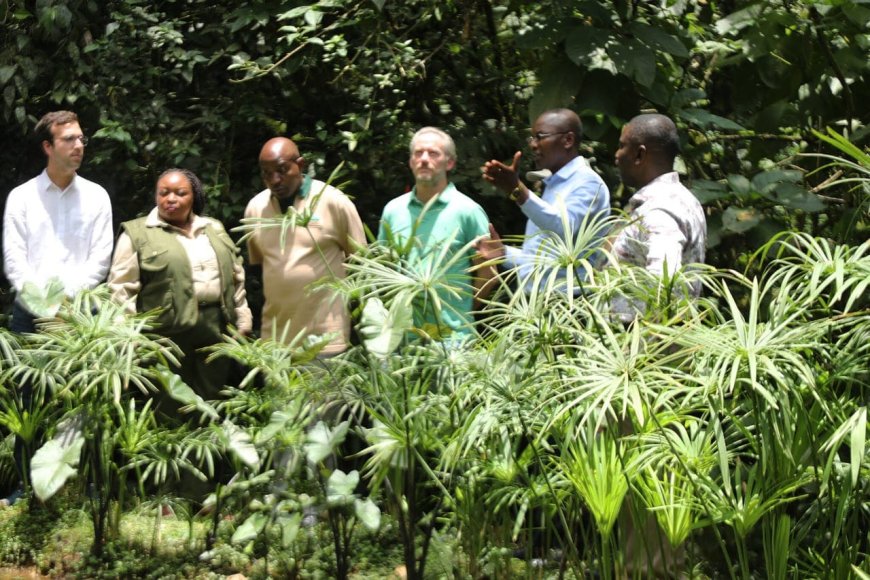
By Aggrey Barasa - After losing nearly a third of its cover in just 50 years, Kakamega Forest has gained powerful allies as France, youth, and local communities launch a project to restore and protect it.
The Cooperation on Forest Preservation in Kenya Project was officially unveiled at Rondo Retreat in Kakamega Forest, bringing together the Embassy of France in Kenya and Somalia, the Wangari Maathai Foundation, the French National Research Institute for Sustainable Development (IRD), the French Agricultural Research Centre for International Development (CIRAD), the International Centre of Insect Physiology and Ecology (ICIPE), and the Green Network Project, alongside the governments of Kakamega and Vihiga counties.
The event was graced by French Ambassador H.E. Arnaud Suquet, Kakamega Deputy Governor Ayub Savula, County Executive for Environment Penninah Mukabane, other senior county leaders, scientists, and community representatives, all united by a common goal: to restore and protect Kakamega Forest, which has lost more than 30 percent of its cover over the past half-century.
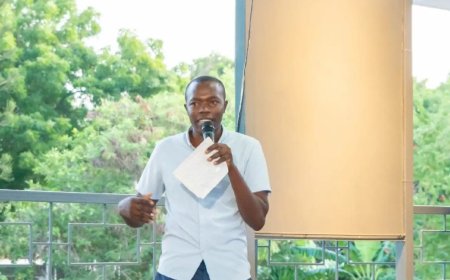
Delivering remarks on behalf of the Wangari Maathai Foundation, board member Sheila Muindi set the tone with an emotional call to action. She reminded the audience that Kakamega Forest is not just a collection of trees, but a living classroom and a cradle of stories passed down through generations.
She emphasized the central role of young people, noting that the Foundation will spearhead youth empowerment through the creation of a Youth Hub, the integration of biodiversity curricula, and the training of eco-guides.
“When young people are empowered, educated, and inspired, they become unstoppable forces for change,” she said, adding that the project is about more than trees, it is about dignity, opportunity, and leadership that bridges generations.
Ambassador Suquet reaffirmed France’s commitment to climate action and sustainable development in Kenya. Earlier in the day, he had signed a Memorandum of Understanding at the Kakamega County offices, formalizing collaboration between the French government, county leaders, and implementing partners.
He also visited the Food4Education kitchen at St. John’s Mahiakalo Primary School, where France is investing €1 million (about KSh 145 million) to provide free school meals for 2,503 vulnerable children in Kakamega between September 2025 and September 2026.
The forest preservation initiative, he explained, complements this investment by addressing long-term sustainability, food security, and climate resilience.
The project aims to weave together science, community engagement, and youth leadership to restore Kakamega Forest and turn it into a living model of sustainable land use.
It focuses on restoring degraded areas while promoting agroforestry and climate-resilient farming. The team will also monitor pollinators and ecosystem health using technology.
Young people are at the center of the plan — they will be trained in ecological farming and eco-tourism, while also gaining advocacy skills to amplify their voices.
Another key element is the creation of ecological corridors to reconnect fragmented forest patches. The ultimate goal is to balance conservation with livelihoods, enabling both biodiversity and local communities to thrive.
Kakamega County leaders welcomed the initiative with optimism while also making appeals for further support. Deputy Governor Savula highlighted the county’s efforts in fencing the forest to protect it from encroachment.
“Together with partners, we have erected a live fence covering 35 kilometers. But 85 kilometers remain. We appeal to our friends, especially the Ambassador, to help us secure support for completing the fencing. Already, we are witnessing positive results, endangered tree species once on the brink are now making a comeback,” he said.
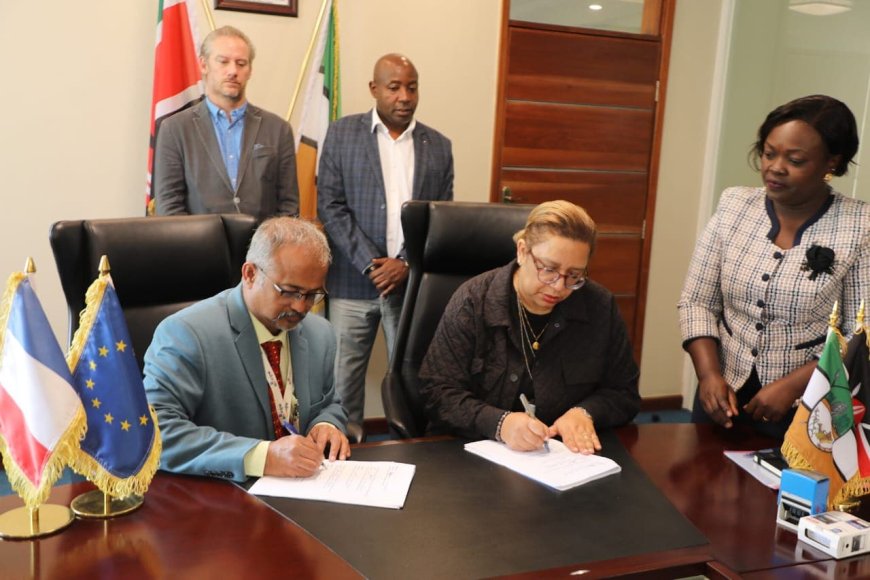 Kakamega County Attorney Vivianne Mbaka looks on as partners sign an MoU at the County Headquarters, alongside French Ambassador Arnaud Suquet and Deputy Governor Ayub Savula.
County Executive for Environment Penninah Mukabane called for infrastructure support to complement conservation work. She requested assistance in tarmacking the road around the forest and improving access to Rondo Retreat, adding that Kakamega is also keen on partnering with more friends to tackle inorganic waste across the county.
The urgency of these appeals was underscored by the stark reality facing Kakamega Forest. Covering about 238 square kilometers, it is the only remnant of the Guineo-Congolian rainforest in Kenya and home to species found nowhere else in the country.
Yet decades of logging, farming, and settlement have fragmented the forest, threatening its biodiversity and placing pressure on nearby communities that depend on it for food, traditional medicine, and essential ecosystem services such as clean water and pollination.
Globally, an estimated 1.6 billion people rely on forests, but in Kenya, only five percent of forests are formally protected. Unless urgent measures are taken, experts warn, Kakamega’s ecosystem could collapse, with ripple effects on pollination, food security, and climate resilience.
Against this backdrop, the project’s emphasis on youth is especially significant. From eco-tourism to ecological farming, from digital biodiversity monitoring to advocacy, young people will not only benefit from training and jobs but will also lead the way in reimagining conservation.
As Muindi told them, “This forest belongs to you. May you walk these trails not just as visitors or guides, but as guardians.” Her words echoed the legacy of the late Nobel laureate Wangari Maathai, who always reminded the world that forests are communities in themselves and that environmental justice cannot be separated from human dignity.
The launch at Rondo Retreat was more than a ceremonial gathering. It marked a commitment by multiple partners to turn Kakamega Forest into a model of climate resilience and sustainable development.
By 2026, the project expects to establish ecological corridors, strengthen pollinator populations, empower hundreds of youth as eco-guides and advocates, integrate biodiversity education into schools, and create livelihoods that allow communities to coexist with conservation efforts.
As the event drew to a close, the forest canopy seemed to lean in, its towering trees bearing silent witness to the pledges made beneath them. Then, almost on cue, the skies opened and a gentle rain began to fall over Rondo Retreat.
To many in attendance, the downpour felt less like coincidence and more like benediction, nature itself appearing to endorse the Memorandum of Understanding and to bless the new partnership.
The message was unmistakable: saving Kakamega Forest is not just about trees, but about safeguarding the shared future of people, biodiversity, and the climate.
The collaboration between France, local governments, scientists, and communities now stands as a potential global model for aligning conservation with education and livelihoods.
The challenges ahead remain formidable, but with the forest baptized in rain and renewed commitment, the seeds of hope planted during this launch seemed destined to take root and flourish.
What's Your Reaction?